
Best 7.1 Speaker Configuration

A well-designed 7.1 speaker configuration delivers an immersive audio experience by enveloping the listener in rich, three-dimensional sound. This setup includes seven main speakers—front left, center, front right, surround left, surround right, back left, and back right—paired with a single subwoofer for deep bass.
Ideal for home theaters and gaming, the 7.1 layout enhances spatial audio accuracy, allowing precise sound localization and a cinematic atmosphere. Proper placement and room calibration are crucial to maximizing performance. From movie nights to virtual gaming battles, the best 7.1 systems provide superior audio clarity and depth, transforming any space into a high-fidelity sound environment.
Best 7.1 Speaker Configuration for Immersive Audio Experiences
A 7.1 speaker configuration is widely regarded as one of the most effective setups for achieving truly immersive surround sound in home theaters and high-end audio environments.
 Speaker Configuration Small Or Large
This layout expands on the traditional 5.1 system by adding two additional rear surround speakers, which significantly enhances spatial precision and directional audio cues. The 7 refers to seven main speakers: left front, center, right front, left surround, right surround, left rear surround, and right rear surround, while the .1 represents the subwoofer dedicated to low-frequency effects (LFE).
Proper placement of each speaker is crucial to ensure balanced sound distribution and optimal imaging. When calibrated correctly, a 7.1 setup allows listeners to experience sounds moving seamlessly around them—ideal for movies, gaming, and multichannel music formats. It is particularly beneficial in larger rooms where sound from a 5.1 system might feel less enveloping.
Speaker Placement in a 7.1 Configuration
Correct speaker placement is fundamental to extracting the full potential of a 7.1 system. The front left, center, and right speakers should form a horizontal line across the viewing area, with the center channel directly above or below the screen, responsible for dialogue reproduction.
The side surround speakers are placed slightly behind the primary listening position, ideally at a 90–110-degree angle from the center. The two rear surround speakers are positioned behind the listener, at a 135–150-degree angle, directly opposite the front speakers, creating a full 360-degree soundfield.
 Speaker Configuration Software
The subwoofer, being non-directional, can be placed in a corner or along a wall for enhanced bass response, though multiple subs may further smooth out low-frequency distribution. Ensuring equal distance from each speaker to the main listening position—combined with proper angling and height—maximizes clarity, imaging, and immersion.
Advantages of a 7.1 Over 5.1 Surround Sound
The primary advantage of a 7.1 over a 5.1 system is improved spatial audio precision and a more consistent envelopment of sound.
The addition of rear surround channels eliminates the gap in audio coverage that can occur in 5.1 setups, especially in larger rooms or theater spaces where listeners are seated farther back. This configuration provides a smoother transition of audio effects moving around the room, such as aircraft flying overhead or vehicles circling in action scenes.
Furthermore, many modern audio formats, including Dolby TrueHD and DTS-HD Master Audio, are natively encoded with 7.1 capability, allowing for uncompressed, theater-grade sound reproduction at home. Gamers also benefit from enhanced positional audio, gaining a competitive edge by accurately identifying directional cues like footsteps or gunfire from behind.
 Speaker Configuration Valorant
Recommended Equipment and Room Requirements
To build the best 7.1 speaker system, selecting the right components and evaluating your room’s acoustic properties are equally important. You’ll need seven full-range speakers (or satellite speakers in compact setups), a powered subwoofer, and an AV receiver that supports 7.1 decoding (such as one compatible with Dolby Atmos or DTS:X).
Speakers should be timbre-matched for consistent tonal quality across all channels. Acoustically, the room should be rectangular with minimal reflective surfaces; consider using acoustic panels, thick curtains, and carpeting to reduce echo and standing waves.
Ideal room size for a 7.1 system is typically over 250 square feet (23 square meters), allowing enough space to position the rear speakers effectively without clustering. Calibration tools like Audyssey MultEQ or Dirac Live help fine-tune speaker levels, distances, and equalization for an accurate soundstage.
| Component | Recommended Feature | Notes |
|---|---|---|
| AV Receiver | Supports Dolby TrueHD & DTS-HD MA | Ensure 7.1 pre-outs and sufficient wattage per channel. |
| Front Speakers | Matched pair with wide dispersion | Position at ear level when seated; angle toward listener. |
| Center Channel | Clear vocal reproduction | Critical for dialogue; use a dedicated center speaker. |
| Rear & Side Surrounds | Dipole or direct-radiating designs | Use dipole for diffuse sound effects; direct-radiating for precision. |
| Subwoofer | 8–12 inch driver, variable crossover | Consider dual subwoofers to smooth bass response. |
Best 7.1 Speaker Configuration: A Comprehensive Setup Guide
What is the 1/3/1/5 speaker placement rule in a 7.1 surround sound setup?

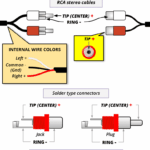 Speaker Wire Configuration
The 1/3/1/5 speaker placement rule is a guideline used in professional and high-end home theater audio setups, particularly in a 7.1 surround sound configuration, to achieve optimal sound imaging, clarity, and immersion.
This rule defines the precise angular positions of the front left, center, front right, surround left, surround right, rear surround left, and rear surround right speakers relative to the primary listening position. The numbers 1/3/1/5 refer to the angles in multiples of 30 degrees from the center listening axis: 30°, 90°, 30°, and 150°, respectively. These angles help establish a balanced soundfield where audio cues are accurately localized, providing a seamless auditory experience during movies, music, or gaming.
Understanding the Numerical Breakdown of the 1/3/1/5 Rule
- The “1” at the beginning stands for 30 degrees (1 × 30°), which is the angle for the front left and front right speakers relative to the center axis. These speakers should be placed at 30° off-center to create a wide stereo image while maintaining clear dialogue anchoring from the center channel.
- The “3” corresponds to 90 degrees (3 × 30°), indicating the placement of the surround left and surround right speakers. Positioned to the side of the listening position, these speakers deliver ambient sounds and directional effects from the sides, ensuring envelopment without making the source too apparent.
- The second “1” represents 30 degrees again, but behind the listener, while the “5” stands for 150 degrees (5 × 30°), marking the position for the rear surround left and rear surround right speakers. These are placed farther back along the sides, creating a natural surround field that enhances spatial realism in 7.1 content.
How the 1/3/1/5 Rule Enhances 7.1 Audio Performance
- By following the 1/3/1/5 dimensions, sound engineers and audiophiles can maintain phase coherence and minimize comb filtering, which helps in preserving the integrity of audio effects as they move around the room. This consistency is critical for maintaining immersion in cinematic content.
- The rule ensures a smooth panning of sound between front, side, and rear speakers, making directional audio cues such as passing vehicles or ambient environmental sounds feel continuous and natural without abrupt jumps or gaps in coverage.
- It is particularly effective in larger rooms where precise angular placement is necessary to achieve uniform sound distribution, reducing hotspots and dead zones that degrade the listening experience.
Practical Implementation Tips for the 1/3/1/5 Configuration
- Begin by identifying the primary listening position (the “sweet spot”). Use a protractor or laser level app to measure the angles accurately: 30° forward for front speakers, 90° to the sides for surrounds, and 150° for the rear surrounds.
- Elevate all surround and rear surround speakers slightly above ear level—ideally between 2 to 3 feet above the listener’s seated head height—to reflect sound effectively and create a diffuse surround field.
- Ensure that the center channel speaker is directly aligned with the screen and aimed toward the listener, reinforcing the 30° front angle references provided by the first “1” in the 1/3/1/5 sequence while maintaining dialogue clarity front and center.
What is the 38% rule in 7.1 speaker layout and how does it optimize surround sound placement?
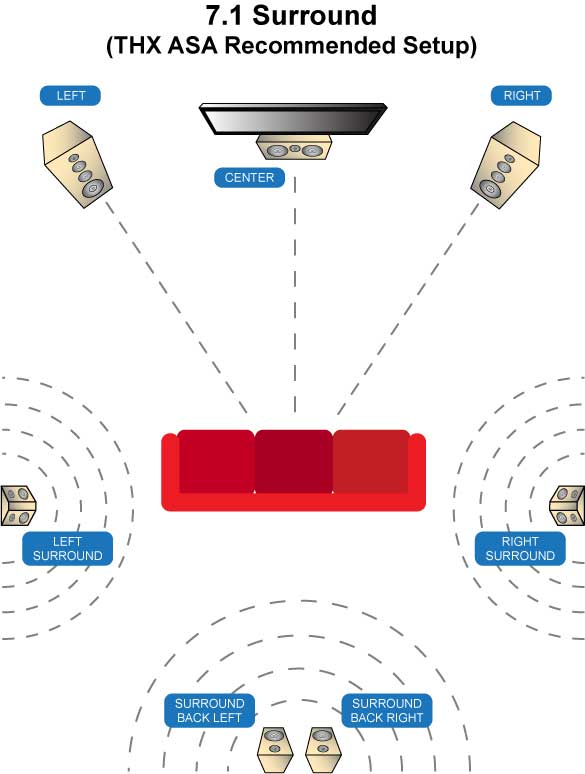
The 38% rule in a 7.1 speaker layout refers to the recommended placement of the side surround speakers, which should be positioned at approximately 38% of the wall length from the central listening position, measured along the side walls.
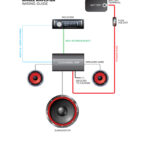 Speaker Wiring Configurations
This guideline is derived from audio engineering research and is intended to create an immersive and balanced soundfield by minimizing early reflections and localization cues that can disrupt the spatial coherence of surround sound.
In a properly calibrated 7.1 system, the front left and right speakers are typically placed at 30 degrees from the center, while the rear surround speakers are located behind the listening area at 110 to 150 degrees. The side surrounds, however, play a crucial role in enveloping the listener with ambient and diffuse sound effects.
By positioning them at the 38% point—measured from the front wall backward along each side wall—engineers aim to achieve a seamless transition between front and rear audio zones, reducing the perception of discrete speaker locations and enhancing the sense of immersion without causing auditory confusion or echoic artifacts.
What is the technical basis of the 38% rule in surround sound design?
- The 38% rule is rooted in psychoacoustics and room acoustics research, particularly studies conducted by organizations like the ITU (International Telecommunication Union) and audio laboratories such as Bell Labs. This percentage represents the optimal lateral placement to ensure that the side surround speakers deliver ambient and spatial audio cues without being too close to the listener, which could result in localized sound, or too far back, which might blend poorly with the rear speakers.
- When sound arrives from the side at this specific offset, it interacts with the listener’s auditory system in a way that supports sound envelopment while preserving the directional integrity of the front and rear channels. The 38% distance typically translates to an angular position of about 90 to 100 degrees from the center listening position, which aligns with recommended ITU-R BS.775 standards for multichannel audio.
- Additionally, placing side surrounds at this location helps minimize comb filtering and phase cancellation effects caused by reflections from walls and furniture. Because the human ear is highly sensitive to timing differences between ears (interaural time differences), the 38% rule ensures that the delay between direct and reflected sound is long enough to be perceived as reverb or ambiance rather than a discrete echo.
How does the 38% rule improve immersion in a 7.1 home theater setup?
- By situating the side surround speakers at the 38% mark along the side walls, the audio system achieves a more uniform and continuous soundfield, allowing directional effects like passing vehicles or ambient environmental sounds to move smoothly from front to back without abrupt jumps between speaker zones.
- This placement enhances the perception of being “surrounded” by sound, as the 38% rule helps distribute diffuse audio content—such as crowd noise, wind, or background music—more evenly around the listener. This reduces the “hotspotting” effect where sound appears to come too strongly from one speaker, breaking the illusion of a cohesive environment.
- Moreover, proper adherence to the 38% rule supports the intended function of the side surrounds: to provide lateral spatial cues rather than direct audio imaging. This ensures that the front speakers remain the primary source of dialogue and on-screen action, while the side and rear speakers add depth and motion, creating a layered and realistic audio experience.
What factors can affect the effectiveness of the 38% rule in real-world installations?
- Room geometry significantly influences the ideal speaker placement. In non-rectangular rooms or spaces with asymmetrical layouts, strictly following the 38% measurement may not yield optimal results, and adjustments based on actual listening tests and acoustic measurements may be necessary.
- Furniture, wall materials, and room treatments such as curtains, rugs, or acoustic panels can alter sound reflections and absorption patterns. In highly reflective environments, the perceived location of sound may shift, making the 38% placement less effective without additional calibration using an AV receiver’s room correction system.
- Loudspeaker directivity and off-axis response also play a role. Some speakers project sound more narrowly or broadly than others, meaning that even if they are located at the 38% point, their tonal balance and dispersion characteristics may require toe-in adjustments or level trimming to maintain a cohesive sound image across all channels.
Frequently Asked Questions
What is a 7.1 speaker configuration?
A 7.1 speaker configuration includes seven main speakers and one subwoofer. The setup consists of front left, center, front right, surround left, surround right, back left, and back right speakers, plus a subwoofer for low-frequency effects. This arrangement provides immersive, theater-quality surround sound, making it ideal for home theaters. It improves audio precision and spatial awareness, delivering a more realistic listening experience during movies, gaming, or music playback.
 TF2 Speaker Configuration
How does a 7.1 speaker system improve home theater audio?
A 7.1 speaker system enhances home theater audio by adding two extra surround speakers compared to 5.1, increasing sound accuracy and depth. These additional rear speakers create a more seamless audio field, allowing sound to move smoothly around the listener. This results in a cinematic experience with precise directional effects, making action scenes and ambient sounds more immersive and realistic during movies, games, or concerts.
Where should I place the speakers in a 7.1 setup?
In a 7.1 setup, place the front left, center, and front right speakers at ear level, forming a semi-circle with the main listening position. Surround speakers go to the sides, and the two rear speakers should be placed behind the listener, also at ear level. The subwoofer can be positioned in a corner or along a wall for optimal bass distribution, ensuring balanced and immersive sound.
Do I need special equipment for a 7.1 speaker system?
Yes, you need an AV receiver that supports 7.1 surround sound to power all seven speakers and the subwoofer. You’ll also need compatible audio sources—like Blu-ray players, gaming consoles, or streaming devices—that output 7.1 audio. High-quality speaker wires and proper room calibration tools or microphones, often included with receivers, help optimize sound performance. This ensures full utilization of the system’s immersive capabilities.
 Valorant Speaker Configuration
Leave a Reply