
Active powered pa speakers
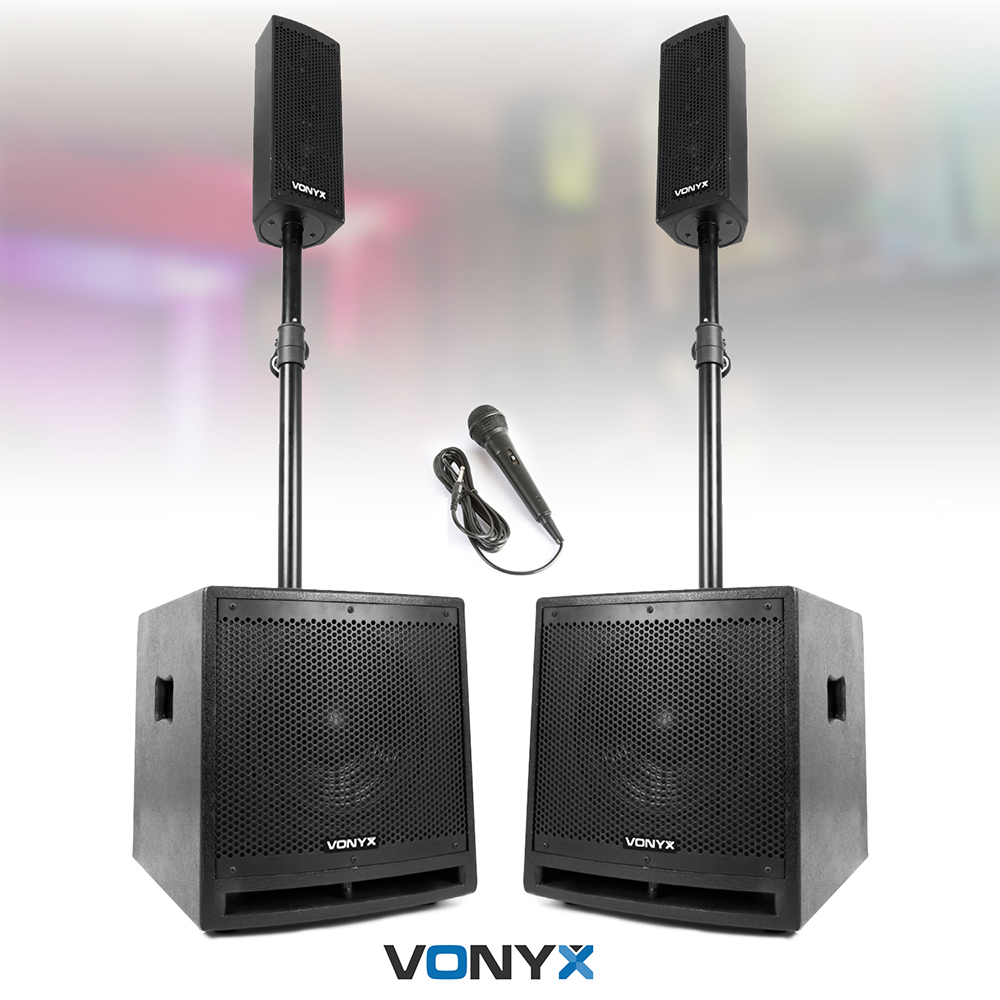
Active powered PA speakers have become essential tools in modern audio setups, combining amplification and speaker components in a single, efficient unit. Designed for clarity, portability, and ease of use, these speakers deliver powerful sound without the need for external amplifiers.
Ideal for live performances, public address systems, and multimedia presentations, they offer seamless integration with various audio sources. Advances in digital signal processing and lightweight materials have enhanced their performance and mobility. With built-in mixers, wireless connectivity, and durable construction, active powered PA speakers provide reliable, high-quality sound across diverse environments—from small venues to large outdoor events.
Understanding Active Powered PA Speakers: The Future of Audio Performance
Active powered PA speakers, also known as self-powered or powered loudspeakers, are increasingly becoming the standard in live sound reinforcement, public address systems, and event audio setups.
 B52 dj speakers
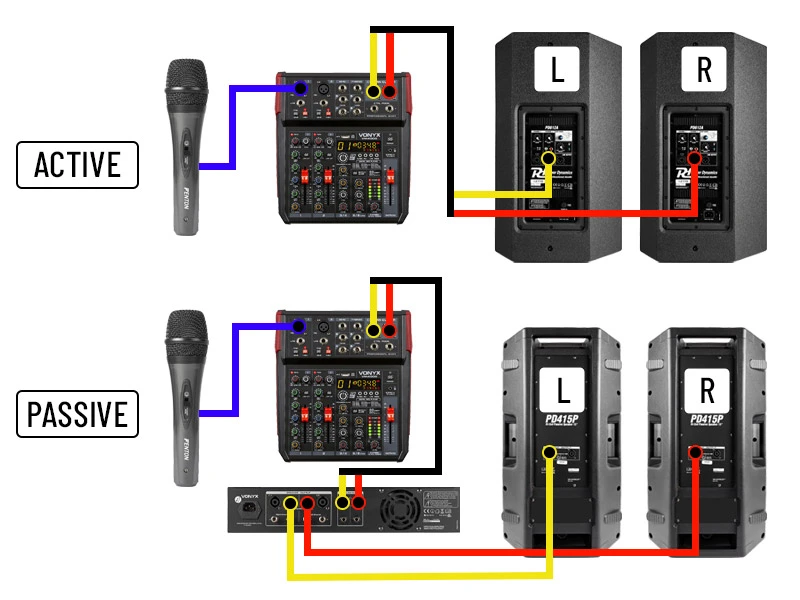
Unlike passive speakers that require an external amplifier, active powered PA speakers have built-in amplifiers specifically matched to each driver (such as the woofer and tweeter), allowing for optimized performance, reduced signal loss, and easier setup.
This integration results in a more compact system with fewer components to transport and connect, which is especially beneficial for mobile DJs, performers, and event technicians who value portability and reliability. Modern active PA speakers often include advanced digital signal processing (DSP), wireless connectivity, and onboard mixers, enabling users to fine-tune sound quality directly from the speaker or via a connected device.
Key Advantages of Active Powered PA Speakers
One of the most significant benefits of active powered PA speakers is their plug-and-play convenience. Since the amplifier is built directly into the speaker cabinet, users eliminate the need for heavy external power amps and complicated cabling between components.
This not only reduces the potential for impedance mismatches and signal degradation but also ensures that the amplifier is perfectly calibrated to the speaker’s drivers through the use of active crossover networks, which split the audio signal before amplification for improved accuracy.
 Qsc portable array dj speakers
Additionally, integrated thermal and over-current protection helps prevent damage during long performances or high-volume operation. These features contribute to enhanced reliability, sound consistency, and ease of use, making active speakers ideal for both indoor venues and outdoor events.
Applications of Active PA Speakers in Modern Sound Systems
Active powered PA speakers are widely used across various audio environments due to their versatility and high performance.
In live music performances, bands and solo artists benefit from the direct connection capability with mixers, audio interfaces, or even smartphones and tablets via Bluetooth. For corporate events, conferences, and educational lectures, their portability and simple setup allow non-specialists to deploy professional-grade sound quickly.
In fixed installations such as houses of worship, gyms, and retail spaces, active speakers simplify wiring and allow remote monitoring or control through networked audio systems like Dante or AES67. Some advanced models support speaker management software, enabling technicians to adjust EQ, delay, and volume settings remotely, ensuring consistent audio coverage across large areas.
 Dj speakers on rent
Technical Features to Consider When Choosing Active PA Speakers
When selecting active powered PA speakers, several technical specifications should be evaluated to meet the specific needs of an application.
Power output (measured in watts RMS) determines the speaker’s loudness and headroom, while frequency response indicates the range of audible sound it can reproduce. Dispersion angles affect how sound spreads across a room, with wider angles providing better coverage for audiences off-axis. Connectivity options such as XLR, TRS, and RCA inputs, as well as Bluetooth and Wi-Fi, offer flexibility in source integration
. Many professional models now feature digital signal processing (DSP) for speaker protection and sound optimization, along with multiple input channels and onboard mixers for mixing microphones and instruments directly on the speaker. Portability is also enhanced by durable materials, built-in handles, and lightweight composite or wood enclosures.
| Feature | Description | Benefits |
|---|---|---|
| Integrated Amplification | Amplifier built into the speaker cabinet | Eliminates need for external amps; ensures perfect driver-amplifier matching |
| Digital Signal Processing (DSP) | Onboard processing for EQ, crossovers, and protection | Optimizes sound quality and protects against damage |
| Wireless Connectivity | Support for Bluetooth, Wi-Fi, or app control | Easy pairing with mobile devices and remote management |
| Active Crossover | Splits signal before amplification for each driver | Precise frequency control and reduced distortion |
| Portability | Lightweight design with handles and durable housing | Ideal for touring, mobile DJs, and temporary setups |
Best Active Powered PA Speakers: A Comprehensive Buying Guide
What are active powered PA speakers and how do they work?
 Column dj speakers
What Are Active Powered PA Speakers?
Active powered PA speakers, also known as powered or self-amplified speakers, are loudspeakers that include built-in amplifiers designed to drive the audio signal directly without requiring an external amplifier.
These speakers are commonly used in public address (PA) systems for live music, speeches, presentations, and events. Unlike passive speakers that rely on separate amplifier units, active speakers integrate the amplifier circuitry within the speaker enclosure, allowing for a more compact and simplified setup.
The built-in amplification is specifically matched to the speaker drivers (such as tweeters and woofers), ensuring optimal performance and reducing the potential for mismatched components. This integration enhances sound quality and makes active PA speakers a popular choice for both professional audio engineers and casual users.
- They contain internal amplifiers that are designed to work with the speaker’s specific drivers.
- They eliminate the need for heavy external amplifiers, making them more portable and easier to set up.
- Active powered speakers often come with built-in signal processing such as equalization, crossover networks, and protective limiting circuits.
How Do Active Powered PA Speakers Work?
Active powered PA speakers operate by receiving an audio input signal—typically via XLR, TRS, or RCA inputs—which is then processed internally before being amplified and sent to the appropriate driver. The internal electronics of an active speaker usually include a crossover network that splits the incoming audio signal into different frequency ranges: high frequencies are routed to the tweeter, while low frequencies go to the woofer (and mid-range frequencies to a dedicated mid-driver, if present).
 Dj controller with built in speakers
Because each driver has its own dedicated amplifier channel (a design known as bi-amping or tri-amping), the amplifier can precisely control and optimize the power delivery. This reduces distortion and improves overall sound clarity. Modern active PA speakers also often feature digital signal processing (DSP) to fine-tune the sound output based on the environment or application.
- The audio signal enters the speaker through a professional input connection and is sent to the internal preamp and processing stages.
- Digital or analog crossover circuits divide the signal into frequency bands suited for individual drivers.
- Each frequency band is amplified by a dedicated amplifier channel before being delivered to the corresponding driver.
Advantages of Using Active Powered PA Speakers
One of the primary benefits of using active powered PA speakers is their convenience and ease of use. Since the amplification is built in, users can connect audio sources directly to the speakers without additional hardware, reducing setup complexity and cable clutter. This plug-and-play nature makes them ideal for mobile DJs, small bands, and event coordinators who need reliable sound without a steep learning curve.
Another major advantage is the manufacturer’s ability to precisely match the amplifier to the speaker components, resulting in better sound quality, reduced risk of damage, and improved reliability. Many models also include front-panel controls or remote software for adjusting volume, equalization, and other parameters, allowing for greater control in diverse acoustic environments.
- They reduce the number of components needed in a sound system, simplifying transport and setup.
- The integrated design ensures optimal power delivery and protection against clipping or overheating.
- Many models support wireless connectivity, digital inputs, and app-based control for enhanced flexibility.
What are the top-rated active powered PA speakers for professional use?

 Dj speakers amp
Top Active Powered PA Speakers for Professional Audio Applications
When it comes to professional live sound, active powered PA speakers deliver convenience, integrated amplification, and optimized speaker-driver performance. Among the most highly rated models are the JBL Professional EON715, the QSC K.2 Series K12.2, and the Electro-Voice ETX-15P.
The JBL EON715 stands out for its versatile DSP controls, excellent high-frequency clarity, and robust 1000W Class D amplification. The QSC K12.2 is frequently praised for its consistent dispersion, durable build, and advanced HDSP™ protection algorithms that ensure reliability under heavy use.
Meanwhile, the Electro-Voice ETX-15P offers exceptional bass response and a powerful 1400W amplifier, making it ideal for large venues and high-SPL environments. These models lead the market due to their combination of sound accuracy, durability, digital processing, and user-friendly features such as wireless control and preset EQ tuning.
- JBL EON715 – Known for its rotatable HF horn and adaptive DSP for different mounting positions.
- QSC K12.2 – Features rock-solid low end and networkability via QSC’s QuickPlay app.
- Electro-Voice ETX-15P – High SPL output and excellent feedback suppression for vocal-heavy events.
Key Features That Define Professional-Grade Active PA Systems
Professional users demand more than just volume—they require reliability, clarity across frequencies, and ease of integration into complex audio setups.
The best active PA speakers offer Class D amplifiers for efficient power, comprehensive digital signal processing (DSP) for EQ, limiting, and crossover management, and robust cabinet construction to endure frequent transport. Many top-tier models include wireless Bluetooth connectivity for quick monitoring or background music use, as well as onboard mixers that allow direct connection of microphones and instruments.
Additionally, advanced thermal and over-drive protection circuits help prevent damage during long performances. The presence of rigging points, pole mounts, and multi-angle bases adds to their flexibility in both portable and installed applications.
- Integrated DSP: Allows precise control over frequency response, delay, and level matching.
- Durable Enclosures: Constructed from polypropylene or birch plywood with reinforced grilles.
- Connectivity Options: Include XLR, TRS, and RCA inputs, with some offering Ethernet or Wi-Fi for system control.
Top Brands Leading the Active PA Speaker Market
Several manufacturers dominate the professional active PA speaker space due to consistent innovation, sound engineering, and reliability. JBL Professional continues to be a leader with its EON and SRX series, known for balanced tonality and wide dispersion.
QSC has solidified its reputation through the K.2 and PLD series, offering studio-grade clarity and resilience in touring environments. Electro-Voice's ETX and ZLX lines are favored by event professionals for their powerful low-end delivery and feedback detection technology.
Other notable brands include Yamaha with its DBR and CP series, and Mackie’s Thump series, both providing solid performance for mid-tier budgets. These companies invest heavily in research and development to ensure their products meet the evolving demands of sound engineers and touring musicians.
- JBL Professional: Innovators in horn design and DSP integration across portable systems.
- QSC: Emphasizes networked audio and user customization via mobile applications.
- Electro-Voice: Specializes in system stability and vocal intelligibility in high-noise environments.
What are the advantages of active powered PA speakers compared to passive systems?
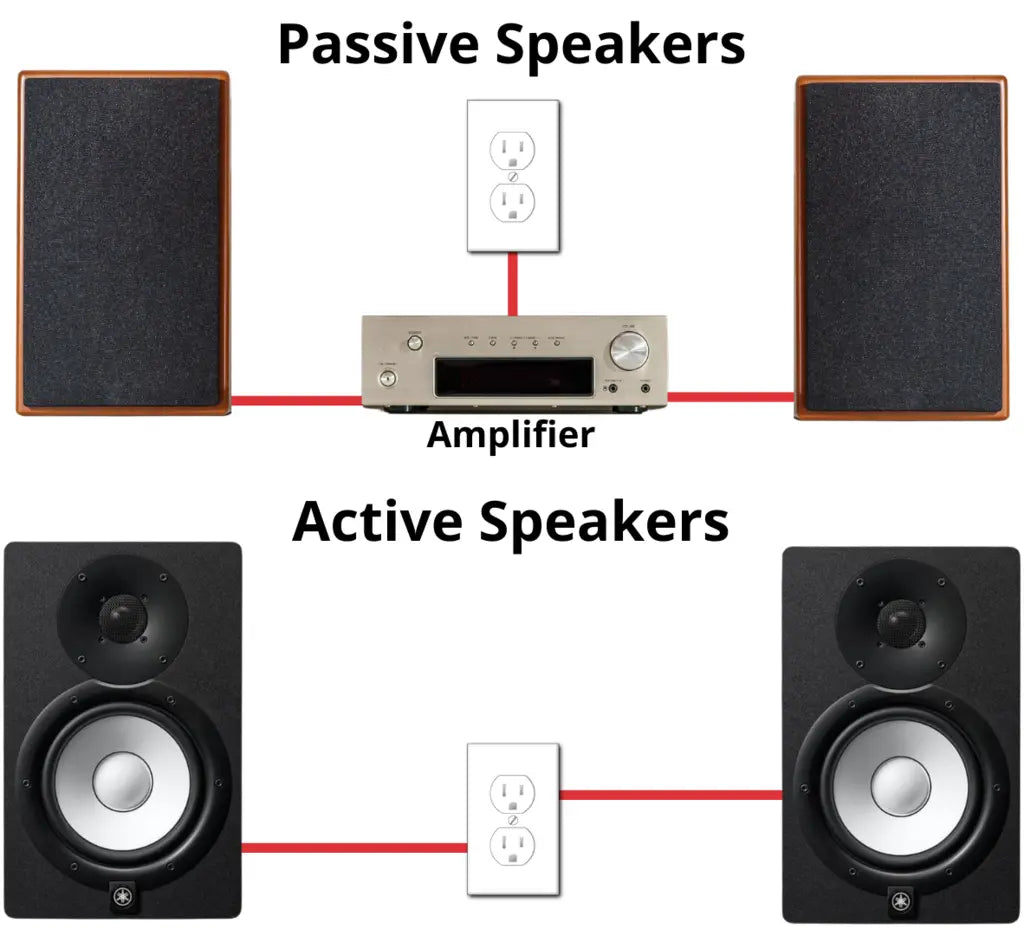
Integrated Amplification and Signal Processing
Active powered PA speakers come with built-in amplifiers and often include advanced digital signal processing (DSP), specifically designed to match the drivers within the speaker cabinet. This integration eliminates the need for external amplifiers, providing a more compact and efficient setup.
The internal amplification ensures optimal power delivery to each driver, as amplifier characteristics are precisely tuned during manufacturing. Additionally, signal processing such as crossover networks, equalization, limiting, and delay are managed internally, reducing setup complexity and potential points of failure.
- Each driver (e.g., woofer, tweeter) is powered by a dedicated amplifier channel, allowing for precise control over frequency ranges and improved sound quality.
- DSP presets can be applied directly from the speaker or via software, enabling quick adaptation to different environments such as live stages, conference halls, or outdoor events.
- Built-in protection circuits help prevent damage from overloads, thermal stress, or clipping, increasing reliability and longevity of the system.
Streamlined Setup and Portability
One of the most notable advantages of active PA systems is their ease of deployment compared to passive setups. Because amplifiers and processing are integrated into the speaker enclosure, users require fewer components and less cabling.
This simplification reduces setup time and minimizes the risk of connection errors. The reduction in necessary hardware makes active speakers especially suitable for mobile DJs, touring musicians, and event sound engineers who prioritize quick deployments and breakdowns.
- Users only need to run audio signals (typically via balanced line-level cables like XLR) to each speaker, rather than heavy speaker cables carrying amplified signals, which can degrade over distance.
- Less equipment to transport—no need for heavy external amplifiers or complex rack systems—makes active speakers more convenient for on-the-go applications.
- Plug-and-play functionality allows even novice users to achieve professional sound quality without deep technical knowledge of amplifier matching or impedance calculation.
Optimized Performance and Consistency
Active powered speakers are engineered as complete systems, with components selected and tuned to work together seamlessly. This holistic design approach results in improved phase coherence, tighter bass response, and greater overall sonic accuracy.
Because the manufacturer controls the entire signal chain, performance is consistent across units, which is particularly beneficial when deploying multiple speakers in arrays or stereo pairs. Passive systems, in contrast, often require careful matching of amplifiers and speakers, which can introduce variability in performance.
- Manufacturers can precisely align crossover points and time-align drivers during production, leading to smoother frequency response and better stereo imaging.
- Reduced signal loss and interference due to shorter internal connections between amplifier and drivers, compared to the longer external pathways in passive systems.
- Consistent sound output across multiple units ensures uniform coverage in larger venues, which is critical for audience experience and sound reinforcement accuracy.
Can active powered PA speakers be used with an amplified PA system?
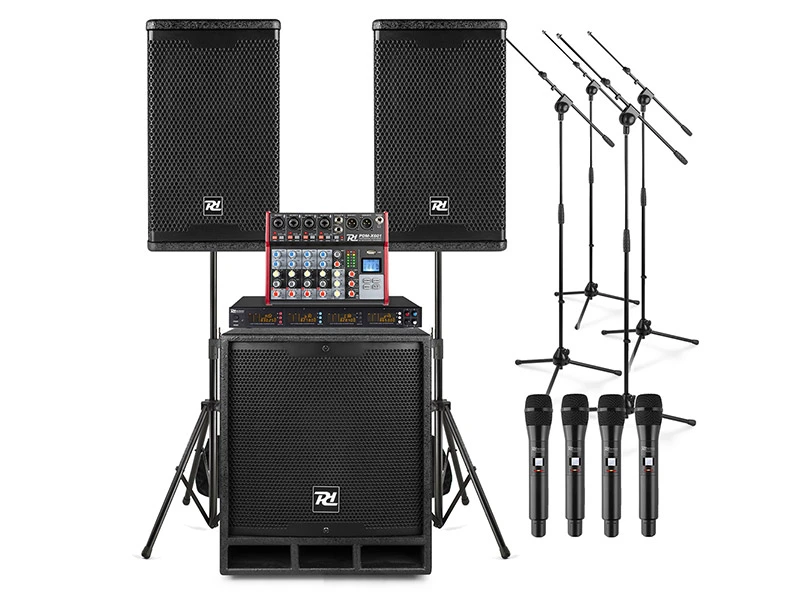
Understanding Active Powered PA Speakers and Amplified PA Systems
- Active powered PA speakers, also known as powered or self-amplified speakers, contain built-in amplifiers designed to work specifically with the speaker drivers they house. This internal amplifier eliminates the need for an external amplifier to drive the speaker, as all necessary amplification circuitry is integrated into the speaker cabinet.
- On the other hand, an amplified PA system typically refers to a setup that includes passive speakers connected to an external power amplifier. In such systems, the signal flows from a mixer to the amplifier, which then powers the passive speakers. The amplifier matches the power and impedance requirements of the speakers to ensure optimal performance.
- Given this fundamental difference in design, directly connecting active speakers to an amplified PA system is not typically necessary or recommended, as it can lead to signal duplication, over-amplification, or even equipment damage if not properly managed.
Potential Methods for Integrating Active Speakers into an Amplified System
- One approach to incorporate active powered PA speakers into an existing amplified PA system is to use the line-level output or preamp output from the mixer. Since active speakers have their own amplifiers, they can accept line-level signals directly, bypassing the external power amplifier that drives the passive speakers in the system.
- A second method involves using a speaker-level to line-level attenuator. If the only available signal source is the amplified output (speaker-level) from an external amplifier, such a device can safely reduce the high-power signal to a line-level signal suitable for input into the active speaker's input jack.
- A third option is to use a passive DI (Direct Injection) box in reverse, although this is less common and requires caution. A DI box can step down the speaker-level signal, but not all DI boxes are built to handle high power, so careful selection and adherence to specifications are crucial to avoid damage.
Practical Considerations and Risks
- Impedance mismatch and signal level incompatibility are significant concerns when attempting to connect active speakers to an amplified output. Feeding a high-power speaker-level signal directly into the input of a powered speaker can destroy its internal amplifier, as these inputs are designed for low-level signals only.
- Another consideration is system control and signal consistency. If both passive and active speakers are operating from different amplification sources, achieving balanced volume levels, tone, and timing can become difficult. This may result in phase issues, uneven frequency response, or feedback problems.
- Additionally, most active speakers include onboard signal processing such as EQ, limiting, or crossover networks. When combined haphazardly with an external amplifier and passive speakers, these internal processing functions may conflict with the overall system tuning, leading to unpredictable sound quality and coverage.
Frequently Asked Questions
What are active powered PA speakers?
Active powered PA speakers are self-contained audio systems with built-in amplifiers and signal processing, designed for public address and live sound applications.
They connect directly to audio sources like microphones or mixers without needing external amplifiers. These speakers are user-friendly, offer consistent sound quality, and are ideal for events, presentations, and performances where a quick and reliable setup is essential.
Do active PA speakers need an external amplifier?
No, active PA speakers do not require an external amplifier because they have built-in amplifiers specifically matched to the speaker drivers. This integration ensures optimal performance and simplifies setup by reducing the number of components needed. Just connect your audio source directly to the speaker using compatible cables, and you're ready to go. This makes them convenient for portable and permanent installations alike.
Can I connect multiple active PA speakers together?
Yes, you can connect multiple active PA speakers together using methods like daisy-chaining or audio splitting, depending on the model. Many active speakers feature input and output connections that allow you to link them while maintaining sound consistency. However, ensure your audio source can support multiple outputs or use a mixer to distribute the signal properly to avoid volume drops or audio imbalance across the system.
Are active powered PA speakers suitable for outdoor events?
Yes, active powered PA speakers are well-suited for outdoor events due to their portability, integrated design, and often robust build. Look for models with weather-resistant ratings if exposed to moisture or dust. Ensure they have sufficient power output and clear sound projection to cover the outdoor space. Always use grounded power sources and protect cables and equipment from environmental elements for safe operation.
Leave a Reply