
Amazon Vs Google Smart Speakers
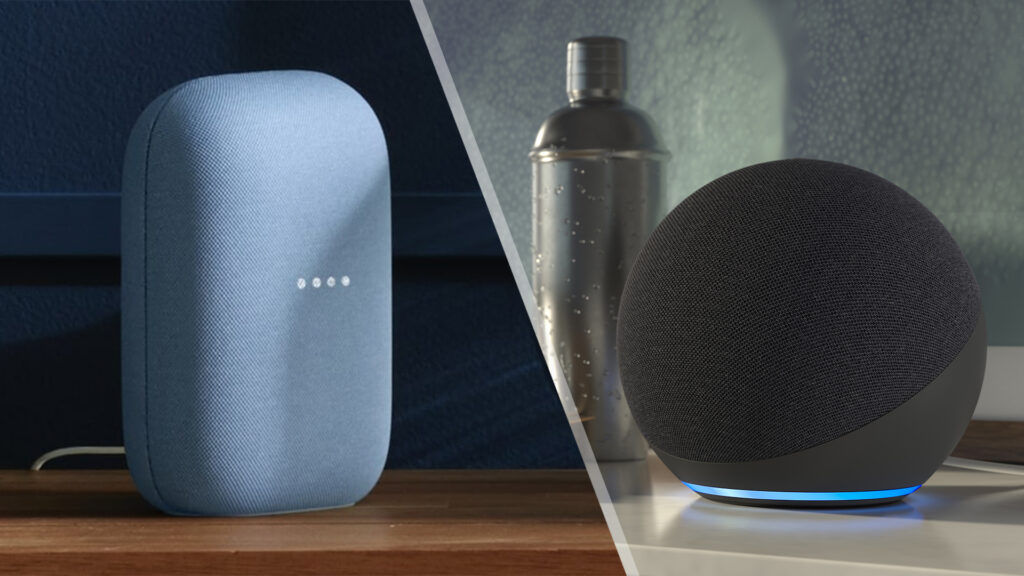
The battle between Amazon and Google in the smart speaker market has defined the evolution of voice-controlled technology. With Amazon’s Echo series and Google’s Nest devices, users are offered seamless integration with digital assistants—Alexa and Google Assistant, respectively.
Both platforms deliver hands-free convenience for tasks ranging from setting reminders to controlling smart home devices. While Amazon pioneered the category, Google quickly caught up with superior natural language understanding and search capabilities.
Consumers now face a crucial choice: ecosystem compatibility, voice recognition accuracy, audio quality, and smart home integration. This comparison explores how these tech giants stack up in the competitive landscape of smart speakers.
 Top 5 Mini Bluetooth Speakers
Amazon Vs Google Smart Speakers: A Comprehensive Comparison of Leading Voice Assistants
When comparing Amazon and Google smart speakers, consumers are presented with two dominant players in the voice-activated technology market: Amazon's Echo lineup powered by Alexa and Google's Nest devices driven by the Google Assistant.
Both platforms offer seamless integration with smart home ecosystems, voice-controlled music streaming, and hands-free assistance for daily tasks such as setting reminders, checking the weather, or controlling connected devices. However, their strengths differ in key areas such as voice recognition accuracy, third-party skill support, audio quality, and ecosystem synergy.
While Amazon pioneered the smart speaker revolution with the original Echo, Google has leveraged its superior natural language processing and search capabilities to deliver more conversational and context-aware responses. The choice between the two often comes down to personal preference, brand loyalty, and which smart home or media ecosystem a user already engages with.
Voice Assistant Performance and Intelligence
The core of any smart speaker lies in its voice assistant, and here, Amazon Alexa and the Google Assistant showcase distinct strengths.
 Top Mini Bluetooth Speakers
Google Assistant is widely regarded as more intelligent and conversational, thanks to Google's expertise in search algorithms and contextual understanding. It excels in answering complex questions, parsing follow-up queries without needing repetition, and integrating real-time information from the web.
For example, asking, Who directed the movie Inception? followed by What other films did he make? is handled fluidly by Google. In contrast, Alexa has improved significantly in recent years but sometimes struggles with multi-step or context-dependent questions, often requiring users to restate key information.
However, Alexa leads in smart home command versatility, supporting a broader range of third-party devices and offering thousands of custom skills that extend functionality beyond core features. This makes Alexa particularly appealing for users invested in a heavily automated home environment.
Audio Quality and Speaker Design
Audio performance is a critical factor for users seeking a smart speaker that also functions as a quality sound system. Amazon’s Echo lineup, particularly models like the Echo Studio and Echo Dot, strikes a balance between affordability and clarity, with the Studio offering 3D audio and Dolby Atmos support for immersive listening.
 Top Rated Mini Bluetooth Speakers
Meanwhile, Google’s Nest Audio and Nest Hub Max deliver warm, well-balanced sound with strong midrange and bass, often praised for their musical fidelity. Independent reviews frequently rate Google speakers as having a slight edge in sound richness and clarity, especially at higher volumes.
Design-wise, Amazon offers a broader range of form factors and price points, from the compact Echo Dot to the high-end Echo Look, while Google maintains a minimalist, modern aesthetic across its devices. For audiophiles or those using speakers primarily for music, Google often wins on pure audio merit, but Amazon provides greater flexibility with options tailored to every room and budget.
Ecosystem Integration and Smart Home Control
One of the most decisive factors for many users is how well each smart speaker integrates into existing digital and home automation ecosystems.
Amazon has a significant lead in third-party compatibility, supporting over 140,000 smart home devices from brands like Philips Hue, Ring, SmartThings, and Ecobee. This extensive network allows Alexa to function as a central hub for lights, locks, cameras, and thermostats with minimal setup.
 Wholesale Mini Bluetooth Speakers
Google Assistant, while improving, supports fewer devices but compensates with deeper integration within the Google ecosystem, including seamless operation with YouTube Music, Google Calendar, Gmail, and Android phones. For users entrenched in Google services, receiving calendar reminders or sending voice commands to mobile devices feels more natural.
Amazon, on the other hand, offers tight integration with its own services like Amazon Music, Prime Video, and Shopping, making it ideal for Prime members. Additionally, Alexa’s routines are more customizable, allowing complex automations based on time, voice, or sensor triggers, which appeals to advanced smart home enthusiasts.
| Feature | Amazon Echo (Alexa) | Google Nest (Assistant) |
|---|---|---|
| Voice Recognition | Good, with strong wake-word detection | Excellent, especially for natural conversation |
| Smart Home Support | Over 140,000 devices supported | Substantial but more limited than Alexa |
| Audio Quality | Varies by model; Studio has 3D audio | Consistently strong, rich sound profile |
| Ecosystem Integration | Best with Amazon Music, Prime, and Ring | Seamless with Google services and Android |
| Custom Skills & Routines | Extensive skills library and routines | Fewer skills, simpler automation |
Frequently Asked Questions
What are the main differences between Amazon Echo and Google Nest speakers?
Amazon Echo devices use Alexa as their voice assistant, excelling in smart home control and shopping through Amazon. Google Nest speakers use the Google Assistant, offering stronger integration with Google services like Calendar and superior natural language understanding.
Echo devices often support more third-party smart home gadgets, while Google excels in answering questions and providing accurate information through its search engine.
 Aomais Go Mini Bluetooth Speakers
Which smart speaker has better voice recognition?
Google Nest speakers generally offer better voice recognition due to Google's advanced speech processing and search capabilities. The Google Assistant understands complex, conversational queries more accurately.
Amazon’s Alexa has improved but still lags slightly in understanding context and multi-part questions. However, both perform well in quiet environments, and accuracy can depend on accent, speech patterns, and background noise.
Do Amazon or Google speakers offer better smart home integration?
Amazon Echo has broader compatibility with a wider range of smart home devices across brands, making it ideal for extensive home automation. Alexa supports thousands of third-party products.
Google Nest works well with many devices but has slightly fewer integrations. However, Google's strength lies in seamless control of Android and Google-compatible smart home products, offering strong, if slightly more limited, ecosystem support.
 Aomais Sport II Mini Portable Bluetooth Speakers
How do Amazon and Google smart speakers compare in audio quality?
Both Amazon and Google offer strong audio performance across their product lines. The Amazon Echo Studio provides immersive 3D audio and deeper bass, making it ideal for music lovers.
Google’s Nest Audio delivers balanced sound with clear vocals and strong midrange. Higher-end models from both brands rival standalone speakers, but Amazon generally leads in premium audio features and third-party sound enhancements.
Leave a Reply