
Balanced Trs Cables For Studio Monitors
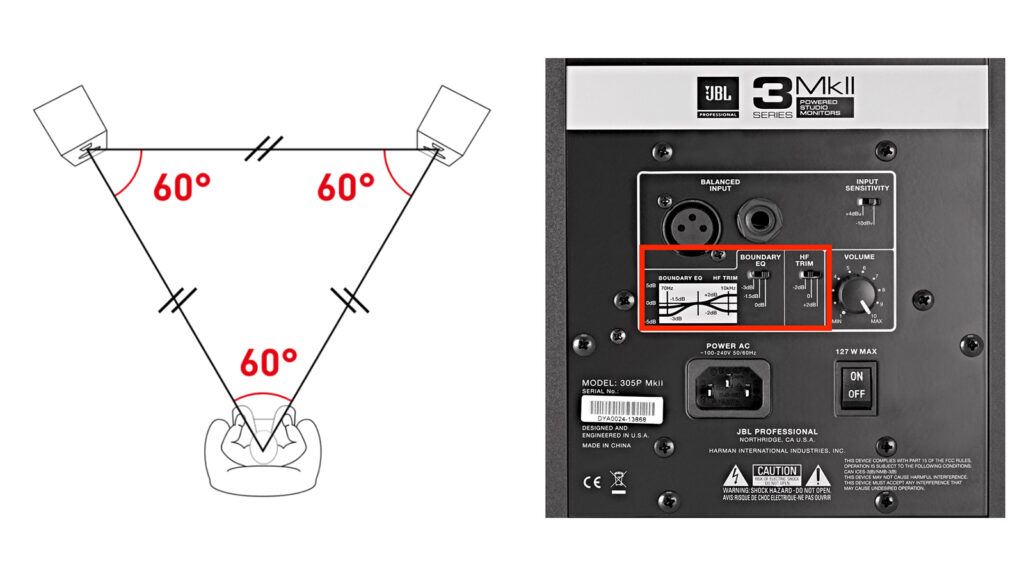
Balanced TRS cables are essential for delivering clear, reliable audio signals in professional studio environments. Designed to connect studio monitors to audio interfaces and mixers, these cables minimize noise and interference by using a three-conductor system that carries balanced audio signals.
The TRS (Tip-Ring-Sleeve) configuration allows for the transmission of both positive and negative audio signals alongside a ground, effectively canceling out any external noise picked up along the cable run. This makes them ideal for long cable runs and electrically noisy spaces. Widely used in recording studios, balanced TRS cables ensure accurate sound reproduction, making them a critical component in achieving high-fidelity audio monitoring.
The Role of Balanced TRS Cables in Optimizing Studio Monitor Performance
Balanced TRS cables play a crucial role in maintaining high-fidelity audio transmission between audio interfaces, mixing consoles, and studio monitors.
 Behringer active pa speakers
Unlike unbalanced cables, which are more susceptible to electromagnetic interference and signal degradation over long distances, balanced TRS (Tip-Ring-Sleeve) cables utilize a three-conductor design that allows for noise cancellation, ensuring clean and accurate audio reproduction. This is particularly important in professional studio environments where even the slightest audio artifact can impact the quality of a mix or master.
Their ability to carry a fully balanced signal—carrying both the original audio signal and an inverted version on separate conductors—enables differential amplification at the receiving end, effectively canceling out interference picked up along the cable run. As a result, balanced TRS cables are a preferred choice for connecting studio monitors in both small project studios and large-scale production facilities where signal integrity is paramount.
Understanding the TRS Connector Design and Signal Configuration
The TRS (Tip-Ring-Sleeve) connector features three distinct conductive sections that separate the left channel, right channel, and ground in stereo applications—or more importantly in balanced mono connections, the positive (hot), negative (cold), and ground conductors.
In balanced audio setups, the hot and cold signals carry identical audio information, though the cold signal is phase-inverted. When the signal reaches the studio monitor, a differential amplifier subtracts the cold signal from the hot, effectively canceling out any common-mode noise—like hum or radio frequency interference—that the cable may have picked up.
 Behringer pa speakers review
This design makes TRS cables highly effective for professional audio applications where cable runs are longer or routing occurs near power sources. The mechanical durability of the TRS plug also ensures reliable connections, critical for maintaining consistent signal flow during long recording or mixing sessions.
Advantages of Using Balanced TRS Cables Over Unbalanced Alternatives
One of the primary advantages of balanced TRS cables is their superior resistance to electromagnetic interference (EMI) and radio frequency interference (RFI), which commonly plague unbalanced cables such as TS (Tip-Sleeve) types.
Unbalanced cables only carry one audio signal and a ground, meaning any interference introduced along the cable path travels directly into the audio output, often resulting in audible hums or buzzes. In contrast, balanced connections leverage common-mode rejection, a technique where interference affects both signal wires equally and is canceled out at the receiving end.
This makes balanced TRS cables ideal for longer cable runs—frequently over 15–20 feet—where unbalanced cables would degrade the signal quality. Additionally, TRS cables support full-differential signaling, ensuring that the studio monitors receive a clean and accurate representation of the source audio, which is essential for critical listening tasks like mixing and mastering.
 Mtx pa speakers
Key Factors When Selecting TRS Cables for Studio Monitor Setups
When choosing balanced TRS cables for studio monitors, several factors must be considered to ensure optimal performance and longevity. Cable gauge (thickness of the internal conductors) affects how much signal can be carried with minimal resistance; a lower AWG number (e.g., 22 AWG or 20 AWG) indicates a thicker wire and better signal integrity over long runs.
Shielding quality is another critical component—braided shielding offers greater flexibility and durability compared to spiral or foil shields, providing excellent protection against interference. Connector build quality, including strain relief and gold-plated contacts, enhances connection stability and resistance to oxidation.
Additionally, the length should be appropriate for the setup; too long may introduce unnecessary clutter and potential signal loss (even minimal with balanced lines), while too short can restrict placement flexibility. It’s also important to ensure both the audio interface and studio monitors feature balanced TRS or XLR inputs to fully benefit from the cable’s noise-canceling capabilities.
| Feature | Benefit | Impact on Studio Use |
|---|---|---|
| Balanced Signal Transmission | Reduces noise and interference | Ensures clean audio output during mixing and production |
| Tip-Ring-Sleeve (TRS) Design | Supports stereo or balanced mono signals | Enables compatibility with most professional audio gear |
| Braided Shielding | Superior EMI and RFI protection | Prevents hum and buzz in electrically noisy environments |
| Gold-Plated Connectors | Resists corrosion and ensures solid connection | Improves long-term reliability and signal consistency |
| Optimal Cable Gauge (20–24 AWG) | Minimizes signal loss | Supports long cable runs without degradation |
Frequently Asked Questions
What are balanced TRS cables used for in studio monitors?
Balanced TRS cables are used to transmit audio signals from audio interfaces, mixers, or preamps to studio monitors without picking up noise or interference. They use three contact points—Tip, Ring, and Sleeve—to carry balanced signals, where one wire carries the audio and another carries an inverted version. This design cancels out noise over long cable runs, ensuring clean, professional sound reproduction in studio environments.
 Mtx audio pa speakers
How do balanced TRS cables reduce noise in audio setups?
Balanced TRS cables reduce noise through a technique called common-mode rejection. The cable sends the original audio signal on one conductor and an inverted version on another. Any interference picked up during transmission affects both equally. At the receiving end, the inverted signal is flipped back, and the two signals combine, causing the noise to cancel out. This delivers a cleaner audio signal, especially over longer cable runs.
Can I use unbalanced cables with studio monitors instead of balanced TRS?
Yes, you can use unbalanced cables with studio monitors if both the output source and monitor inputs support them. However, unbalanced cables are more prone to picking up noise and interference, especially over distances longer than 10–15 feet. For professional studio setups where audio clarity is crucial, balanced TRS cables are preferred. Always match your cable type to your equipment’s input/output options for best performance and minimal signal degradation.
What length of TRS cable should I use for my studio monitors?
Choose a TRS cable length that allows comfortable connection between your audio interface or mixer and studio monitors without excess slack or tension. Typically, 6 to 15 feet (1.8 to 4.5 meters) works well for most home or professional studios. Use the shortest cable that fits your setup to minimize clutter and signal loss. High-quality balanced TRS cables maintain signal integrity even at longer lengths, but avoid unnecessarily long runs.
 Wall Mount Studio Monitors
Leave a Reply