
Boat Tower Speaker Installation
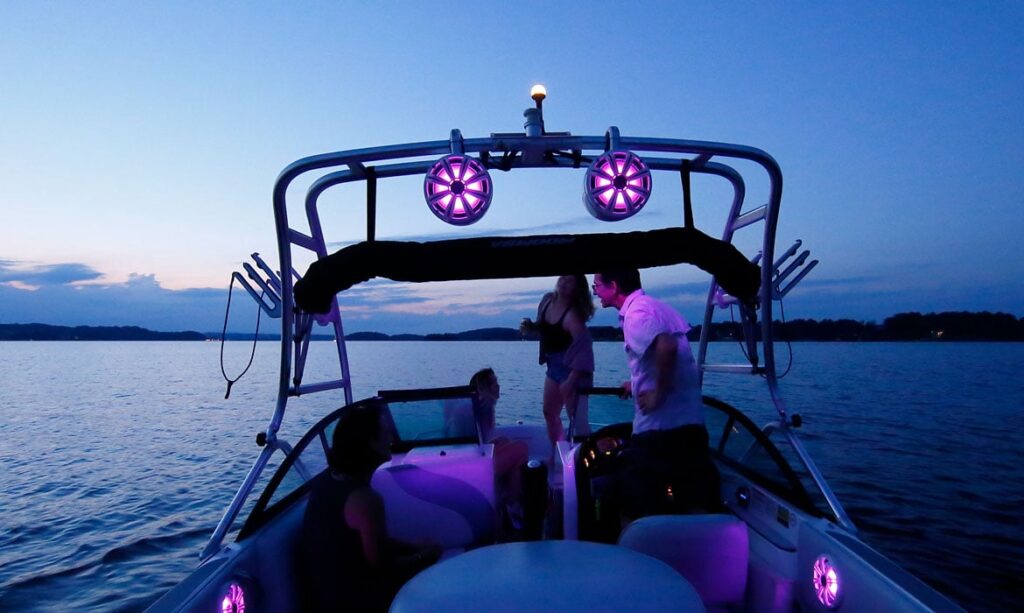
Installing tower speakers on a boat enhances the audio experience for everyone on board, delivering powerful sound that cuts through wind and engine noise.
Whether for cruising, watersports, or entertaining at anchor, a well-designed speaker system ensures clear, dynamic audio across the vessel. Proper boat tower speaker installation involves selecting marine-rated speakers, planning speaker placement for optimal coverage, and routing wiring safely and cleanly.
Waterproof connections, corrosion-resistant hardware, and secure mounting are essential for durability in harsh marine environments. With the right tools and techniques, boaters can achieve a professional-grade audio setup that withstands sun, salt, and spray while maximizing enjoyment on the water.
 Affordable Studio Monitor Headphones
How to Properly Install Boat Tower Speakers for Optimal Sound and Performance
Installing speakers on a boat tower enhances the audio experience during water activities, providing clear, powerful sound that complements the open-air environment. Proper installation involves selecting the right speakers, positioning them for maximum coverage, wiring them correctly, and securing all components to withstand marine conditions.
Whether you're installing waterproof cone speakers, coaxial models, or high-performance marine-grade audio systems, understanding the structural and electrical aspects of your boat's tower is essential.
Factors such as tower diameter, material (stainless steel, aluminum, or coated steel), and existing wiring channels influence the installation approach. With careful planning and the right tools, boat tower speaker installation can significantly elevate onboard entertainment while maintaining durability and safety on the water.
Choosing the Right Marine Speakers for Your Boat Tower
Selecting appropriate speakers is the first critical step in a successful boat tower speaker installation. Marine-grade speakers are specifically designed to endure exposure to saltwater, UV rays, and constant vibration, making them essential for tower mounting.
 Affordable Studio Monitor Speakers
Look for models labeled as waterproof or marine-rated, featuring stainless steel grilles, rubber surrounds, and corrosion-resistant baskets. Common speaker sizes for towers range from 6.5 inches to 8 inches, with larger sizes providing deeper bass and wider sound dispersion.
Consider sensitivity ratings (measured in decibels) and impedance (usually 4 ohms) to ensure compatibility with your marine amplifier. High-sensitivity speakers (90 dB or above) deliver louder sound with less power, ideal for open environments like lakes or rivers.
Mounting and Positioning Strategies for Maximum Audio Coverage
Proper speaker placement on the boat tower ensures balanced sound across the deck, swim platform, and surrounding water. Mounting speakers too high can direct sound above passengers, while placing them too low may result in uneven coverage.
Ideally, speakers should be angled downward at approximately 15 to 30 degrees to project sound toward the seating and activity areas. On T-top, arch, or A-frame towers, use adjustable mounting brackets that allow for swivel or pivot positioning.
 Balanced Studio Monitor Cables
Avoid obstructing critical boat functions such as radar, GPS antennas, or navigation lights. Ensuring symmetry—mounting speakers at equal heights and angles—creates a more immersive soundstage and prevents audio imbalance from one side of the boat to the other.
Wiring and Power Connection Best Practices
Reliable wiring is crucial for delivering consistent power and clear audio signals to tower-mounted speakers. Use marine-grade speaker wire, typically 16-gauge or 14-gauge, depending on distance and power output—shorter runs can use 16-gauge, while longer runs benefit from 14-gauge to reduce signal loss.
Run wires through the interior of the tower when possible, protecting them from sun exposure and physical damage. Seal all wire entry and exit points with waterproof conduit and dielectric grease to prevent moisture intrusion and corrosion.
Connect speakers to a marine-rated amplifier mounted in a dry, ventilated area, and always use fuses on power lines near the battery. Proper grounding and the use of heat-shrink connectors instead of wire nuts ensure long-term reliability in harsh marine environments.
 Balanced Trs Cables For Studio Monitors
| Component | Recommended Specification | Importance |
|---|---|---|
| Speaker Type | Marine-rated, waterproof coaxial or component | Ensures durability against moisture and UV exposure |
| Speaker Wire Gauge | 14-gauge (long runs), 16-gauge (short runs) | Minimizes power loss and maintains sound quality |
| Mounting Hardware | Stainless steel U-brackets or rotating mounts | Provides secure fit and allows angle adjustment |
| Amplifier | Marine-certified with proper RMS output | Delivers consistent power without overheating |
| Connections | Heat-shrink connectors, dielectric grease | Prevents corrosion and ensures long-term reliability |
Step-by-Step Guide to Boat Tower Speaker Installation
Where is the optimal placement for speakers on a boat tower?
Height and Angle of Mounting
Positioning speakers at the correct height and angle on a boat tower is crucial for achieving uniform sound distribution across the deck and surrounding areas. Ideally, speakers should be mounted between 6 to 8 feet above the deck surface to allow clear audio projection without being obstructed by people or equipment. This height range ensures sound waves travel freely over heads and cover more area.
A slight downward angle (approximately 15 to 30 degrees) directs audio toward the listeners rather than dispersing it upward into open air. Proper angling also minimizes sound reflection off water surfaces, which can cause echo or muffled audio. Using adjustable speaker mounts facilitates fine-tuning after installation to match specific boat configurations and listening zones.
- Mount speakers 6–8 feet above the deck to maximize sound coverage and minimize obstructions.
- Angle speakers slightly downward to focus sound on occupants and avoid wasteful upward dispersion.
- Use adjustable brackets to customize positioning post-installation for better acoustic alignment.
Speaker Spacing and Symmetry
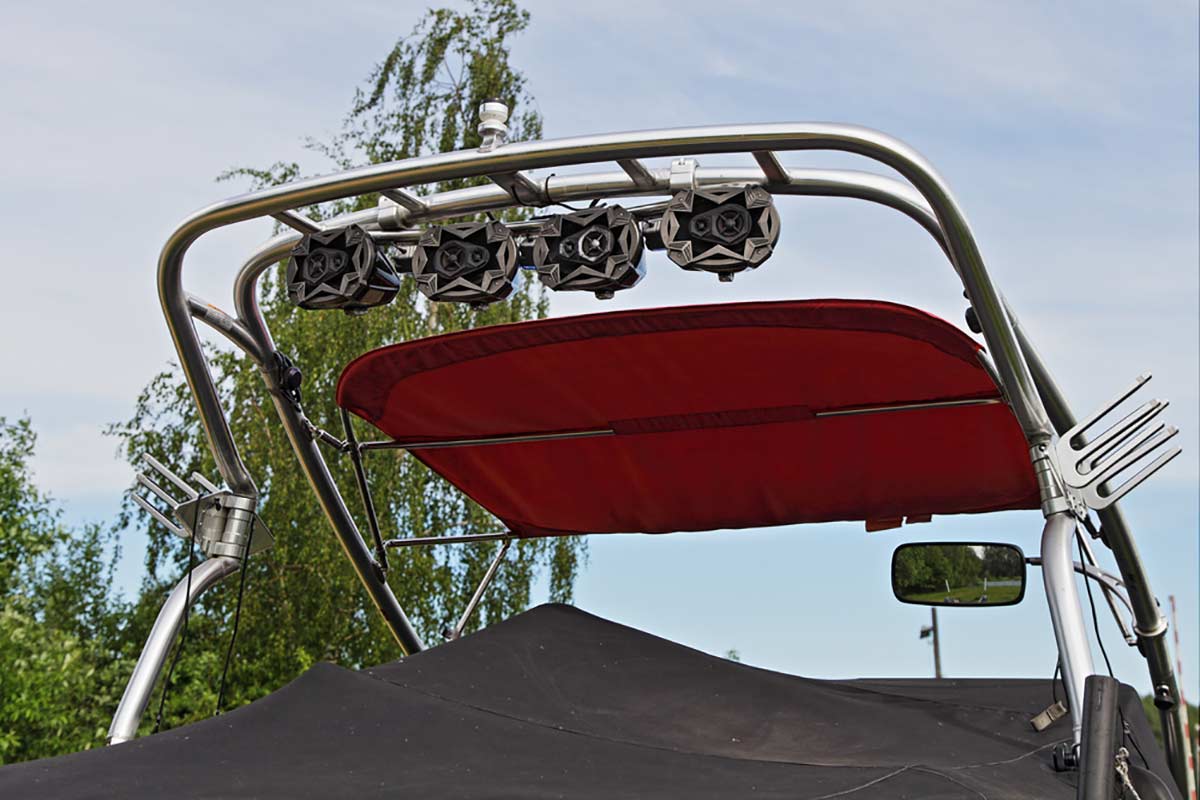
Achieving balanced audio across the boat depends heavily on the spacing and symmetry of tower-mounted speakers. Speakers should be evenly distributed along the tower’s structure to ensure consistent stereo imaging and eliminate audio dead zones.
For most tower designs, installing a pair at the front and a pair at the rear provides comprehensive coverage, especially when wiring them in a true stereo configuration. Symmetrical placement prevents one side from overpowering the other and helps maintain a central soundstage. This is particularly important when people are seated at various locations around the boat, such as in the bow, cockpit, or watersports areas behind the vessel.
 Behringer Truth B2031a Studio Monitors
- Space speakers evenly on the tower—typically two in front and two in back—for full sound field dispersion.
- Ensure symmetrical left-right positioning to preserve stereo balance and prevent uneven volume levels.
- Position rears slightly behind the helm area to envelop rear passengers without overwhelming the driver.
Weather and Vibration Resistance
While optimal sound placement is important, long-term durability should also influence where and how speakers are mounted on a boat tower.
The tower environment exposes equipment to constant UV radiation, moisture, and mechanical vibration from boat movement and engine operation. To protect speaker integrity and performance, select marine-rated models with UV-resistant housings, waterproof cones, and corrosion-proof grilles.
Mounting hardware should be made of stainless steel or coated materials to prevent rust. Avoid locations where speakers might be struck by boarding ladders, tow ropes, or moving tower components, as physical damage can degrade both sound quality and structural security.
- Choose marine-grade speakers designed to withstand direct sun exposure and saltwater conditions.
- Use vibration-dampening mounts to reduce wear on speaker components caused by engine and wave vibrations.
- Avoid placing speakers near moving parts or high-traffic zones where bumping or impact is likely.
Can you install a tower on your boat for speaker setup?
 Best 8 Inch Studio Monitor
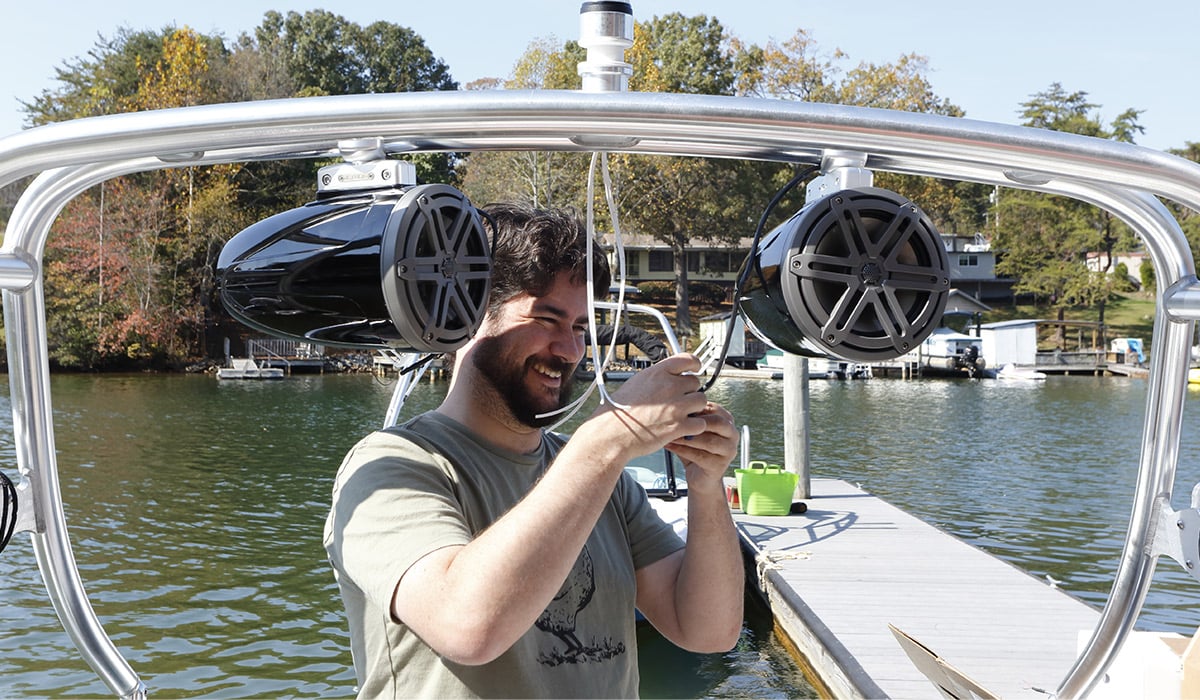
Yes, you can install a tower on your boat for speaker setup, particularly if you have a wake sports boat or any vessel designed for recreational audio enjoyment on the water.
A tower not only enhances the overall look of the boat but also serves as a functional platform to mount waterproof speakers, lighting, GPS units, and even wakeboard or waterski racks.
Speakers mounted on a tower deliver superior sound distribution across the deck and surrounding water because they are elevated above passengers and obstructions, minimizing sound blockage and improving acoustics. Towers are typically made from marine-grade aluminum or stainless steel to resist corrosion and are designed to be compatible with various speaker brands and models.
Benefits of Installing a Tower for Speaker Mounting
- Installing a tower significantly improves sound dispersion. Because speakers are raised above the boat’s structure, audio travels more evenly across the deck and into the water, offering a consistent listening experience for everyone on board.
- Elevated speaker placement reduces interference from people, wind noise, and physical obstacles. This results in clearer, louder sound without the need to excessively increase volume, which in turn preserves audio quality and reduces distortion.
- Many towers come with built-in wiring channels that allow for clean and protected routing of speaker wires. This not only enhances the aesthetic by avoiding exposed cables but also protects the wiring from water, UV exposure, and abrasion.
Types of Towers Compatible with Speaker Systems
- Folding towers are popular for their versatility. They can be lowered for storage or when passing under bridges, and many include pre-drilled mounting points for 6.5-inch or 8.8-inch marine speakers on the upper frame.
- Full arch towers offer a bold design and maximum mounting space. These rigid, fixed structures typically support multiple speaker pairs and additional accessories like amplifiers or LED lighting, making them ideal for audiophiles.
- Rear-mount or swim platform towers are compact options designed for smaller boats. Though less common, they still allow for elevated speaker placement and are often used on pontoons or deck boats that prioritize space efficiency and accessibility.
Considerations Before Installing a Tower for Audio Use
- Boat structure and weight capacity must be evaluated. Adding a tower increases top-heaviness, which can affect stability, especially in rough water or at high speeds. Confirm that your boat model is designed to support an aftermarket or OEM tower.
- Ensure that your marine audio system has sufficient power to drive speakers mounted at height. Elevated speakers may require amplification due to increased distance from listeners, and impedance matching is critical to avoid overloading the receiver.
- Pay attention to waterproofing and UV resistance. All components, including speakers, wiring, and tower finishing, should be rated for marine environments to prevent degradation from constant sun and water exposure.
Do tower speakers for boats require an external amplifier during installation?
 Best Budget Studio Monitors 2025
Understanding Tower Speaker Power Requirements
Tower speakers for boats are typically designed to deliver high-volume sound performance, making them ideal for open-water environments where ambient noise levels are high.
These speakers often have higher power handling capabilities, measured in watts, compared to standard marine speakers. Because of their power demands, many tower speakers operate most efficiently with more power than a typical marine head unit can provide.
Most factory or entry-level stereo systems output around 30 to 50 watts per channel, which may not be sufficient to drive tower speakers to their full potential. As a result, achieving clear, distortion-free sound at high volumes usually requires additional amplification.
- Tower speakers often have power handling ratings exceeding 100 watts RMS per channel, demanding more power than standard head units can deliver.
- Underpowering tower speakers can lead to clipping and distortion, which can damage the speakers over time.
- Matching speaker impedance (usually 4 or 8 ohms) with an amplifier ensures optimal power transfer and sound quality.
When an External Amplifier Is Necessary
An external amplifier is generally required when the boat’s built-in stereo lacks the power output needed to drive tower speakers effectively. High-performance tower speakers, especially those with large drivers and powerful tweeters, are built to project sound over long distances and through wind and water noise.
Without adequate amplification, these speakers will underperform, resulting in weak bass, limited volume, and poor clarity. Additionally, using an external amplifier allows for better system control, such as adjusting crossover settings and gain levels, optimizing audio performance in a marine environment.
- If your tower speakers have a sensitivity rating below 90 dB, they will require more power—making an amplifier essential for efficient operation.
- When running multiple tower speakers, an amplifier with multiple channels ensures each speaker receives adequate and balanced power.
- Amplifiers designed for marine use offer protection against moisture, heat, and corrosion, ensuring reliable performance on the water.
Scenarios Where an Amplifier Might Not Be Needed
While most high-performance tower speaker installations benefit from an external amplifier, there are situations where one might not be required. Entry-level or low-power tower speakers, especially those rated for 50 watts RMS or less per channel, can sometimes be driven adequately by a high-quality marine head unit.
Some modern digital stereos come with built-in amplifiers that output 75 watts or more per channel, which may be sufficient for casual listening at moderate volumes. However, even in these cases, adding an amplifier can improve headroom, reduce distortion, and provide cleaner sound under load.
- Low-power tower speakers paired with a high-output head unit (75W+ per channel) may perform acceptably without an external amp for light use.
- Boaters who primarily listen to music at low to medium volumes may not notice a significant difference without an amplifier.
- Some all-in-one marine audio systems include built-in amplification specifically designed to power tower speakers, eliminating the need for additional hardware.
Frequently Asked Questions
What tools are needed for boat tower speaker installation?
Basic tools for boat tower speaker installation include a drill, hole saw, screwdrivers, wire cutters, crimping tool, marine sealant, and stainless steel screws. A multimeter helps verify wiring connections.
Ensure all tools are suitable for marine environments to prevent corrosion. Having a template for speaker placement can improve accuracy. Always disconnect the power source before starting to ensure safety during the installation process.
How do I choose the right location for tower speakers on my boat?
Select speaker locations on your boat’s tower that provide even sound coverage and avoid obstructions. Position them facing towards the seating area for optimal audio experience.
Ensure there's enough space for mounting hardware and wiring access. Avoid areas exposed to direct water spray when possible. Confirm the tower material can support the speakers. Proper placement enhances sound quality and minimizes distortion while cruising or anchored.
Can I install tower speakers on any type of boat tower?
Most tower speakers can be installed on wake sports boats with aluminum or stainless steel towers. Compatibility depends on tower diameter, material, and design.
Clamp-style mounts work with standard round tubes, while custom brackets may be needed for odd shapes. Always verify manufacturer specifications before purchasing. Some inflatable or lightweight towers may not support added speaker weight. When in doubt, consult a marine audio specialist.
How do I weatherproof my boat tower speaker wiring?
Use marine-grade wiring and sealed connectors to prevent moisture damage. Route wires through protective conduit and avoid low points where water can collect.
Seal all entry points with marine silicone. Crimp and heat-shrink connections are more reliable than electrical tape. Keep wire splices elevated and protected inside junction boxes when possible. Proper weatherproofing ensures long-term reliability and protects your audio system from corrosion and short circuits.
Leave a Reply