
Dolby Atmos Speaker Configurations
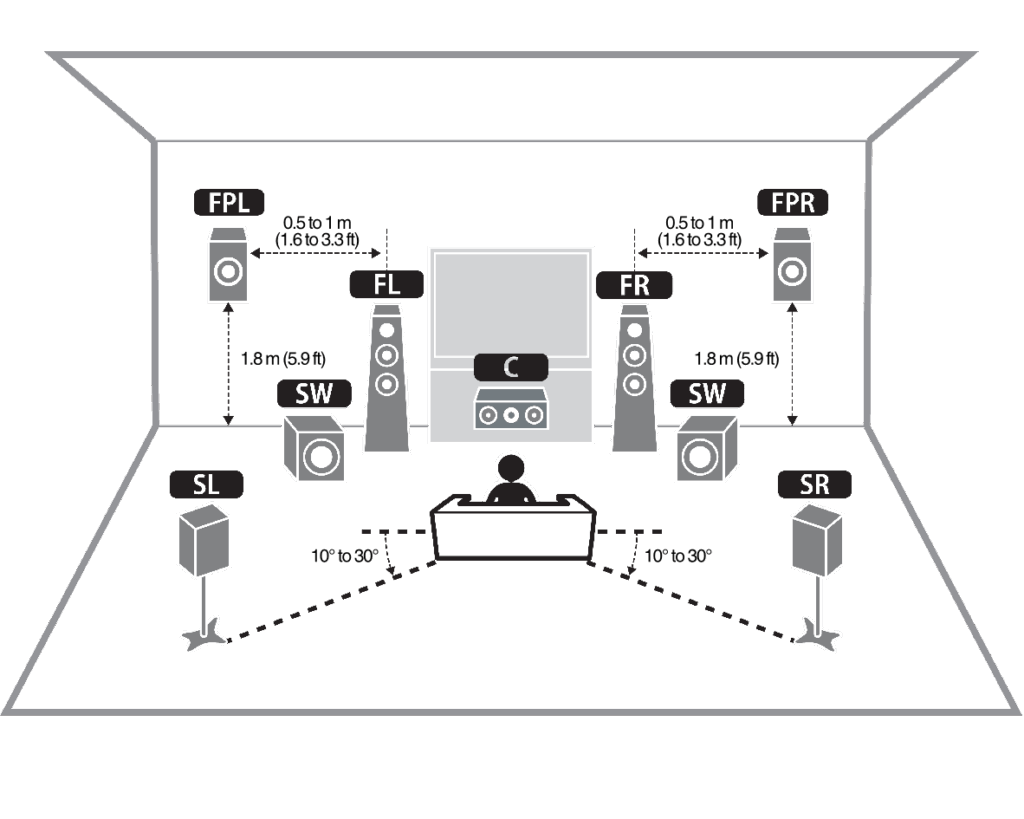
Dolby Atmos has revolutionized home audio by introducing a three-dimensional sound experience that goes beyond traditional surround sound. Unlike conventional setups, Dolby Atmos adds height channels, allowing sound to move overhead for a more immersive effect.
This technology relies on specific speaker configurations to deliver optimal performance, whether in a theater or living room. From 5.1.2 to 7.1.4 layouts, each number represents speakers in the surround, front, and height planes.
Proper placement and calibration are crucial to harness the full potential of Dolby Atmos, making understanding these configurations essential for both audiophiles and casual listeners seeking a cinematic audio experience at home.
 Sonos Speaker Not Configured
Dolby Atmos Speaker Configurations: Understanding Immersive Audio Layouts
Dolby Atmos revolutionizes traditional surround sound by introducing an object-based audio system that allows sounds to move freely in three-dimensional space, rather than being confined to fixed speaker channels.
This immersive technology relies on a combination of floor-standing, wall-mounted, ceiling speakers, or specialized upward-firing modules that reflect sound off the ceiling to simulate overhead audio. Unlike conventional setups like 5.1 or 7.1, Dolby Atmos configurations include height channels, denoted by a third number (e.g., 5.1.2 or 7.2.4), where the last number represents speakers or audio layers positioned above the listener.
These configurations can range from minimal home theater systems to elaborate installations in commercial cinemas. The key to effective Dolby Atmos performance lies in precise speaker placement, room acoustics, and compatible source content that takes full advantage of the spatial audio rendering capabilities.
Common Dolby Atmos Speaker Layouts Explained
Dolby Atmos speaker configurations vary based on room size, budget, and desired audio fidelity, but standard setups include 5.1.2, 5.1.4, 7.2.4, and larger.
 Speaker Configuration Mono Or Stereo Valorant
The first number refers to main speakers at ear level, the second to subwoofers, and the third to overhead or height speakers. A 5.1.2 layout features five ground-level speakers (front left, center, front right, surround left, and surround right), one subwoofer, and two overhead speakers—ideal for smaller rooms.
In contrast, a 7.2.4 system includes seven ear-level speakers, two subwoofers, and four height speakers, providing enhanced sound localization and richer immersion. Professional cinema installations may use 9.1.6 or higher configurations for maximum spatial resolution. Choosing the right layout involves balancing available space, speaker compatibility, and AV receiver support for Dolby Atmos decoding.
| Configuration | Main Speakers | Subwoofers | Height Channels | Best Use Case |
|---|---|---|---|---|
| 5.1.2 | 5 | 1 | 2 | Small to medium home theaters |
| 5.1.4 | 5 | 1 | 4 | Medium-sized rooms with ceiling speakers |
| 7.1.4 | 7 | 1 | 4 | Large home theaters with expanded surround |
| 7.2.6 | 7 | 2 | 6 | High-end immersive setups |
Speaker Placement and Room Requirements for Optimal Performance
Proper speaker placement is crucial for delivering the full three-dimensional sound experience that Dolby Atmos promises.
Overhead or height speakers should be installed in precise locations—typically at a 45- to 45-degree angle above the primary listening position—to accurately render vertical sound movement. For rooms where ceiling installation isn’t feasible, Dolby Atmos-enabled upward-firing speakers can be placed atop or integrated into front and rear speakers, bouncing sound off the ceiling.
 Speaker Configuration Windows 10
Rooms should ideally have flat, reflective ceilings made of acoustically suitable materials like drywall to ensure reflected sound is clear and effective. The AV receiver must support Dolby Atmos decoding and be capable of driving the required number of amplifier channels. Careful calibration using tools like Audyssey or Dirac Live ensures that the system adapts to the room’s unique acoustics for balanced sound distribution.
Types of Dolby Atmos Speakers and Their Roles
Dolby Atmos systems utilize several types of speakers, each designed for a specific role in creating immersive audio environments. Ceiling-mounted speakers are the most effective for height channels, delivering direct overhead sound for precise object placement.
Upward-firing modules, placed on top of existing speakers or furniture, rely on ceiling reflection and are ideal for renters or those unable to modify their space. Built-in Atmos speakers in soundbars combine traditional front channels with upward-firing drivers, offering a space-saving but limited alternative to full surround systems.
Additionally, bipole and dipole surround speakers enhance ambient effects and diffuse sound fields, especially in larger rooms. The choice of speaker type impacts both audio quality and system flexibility, making it essential to match speaker technology with room constraints and user needs.
 Speaker Configurations
Dolby Atmos Speaker Configurations: A Comprehensive Guide to Optimal Setup
What is the optimal speaker setup for Dolby Atmos audio?
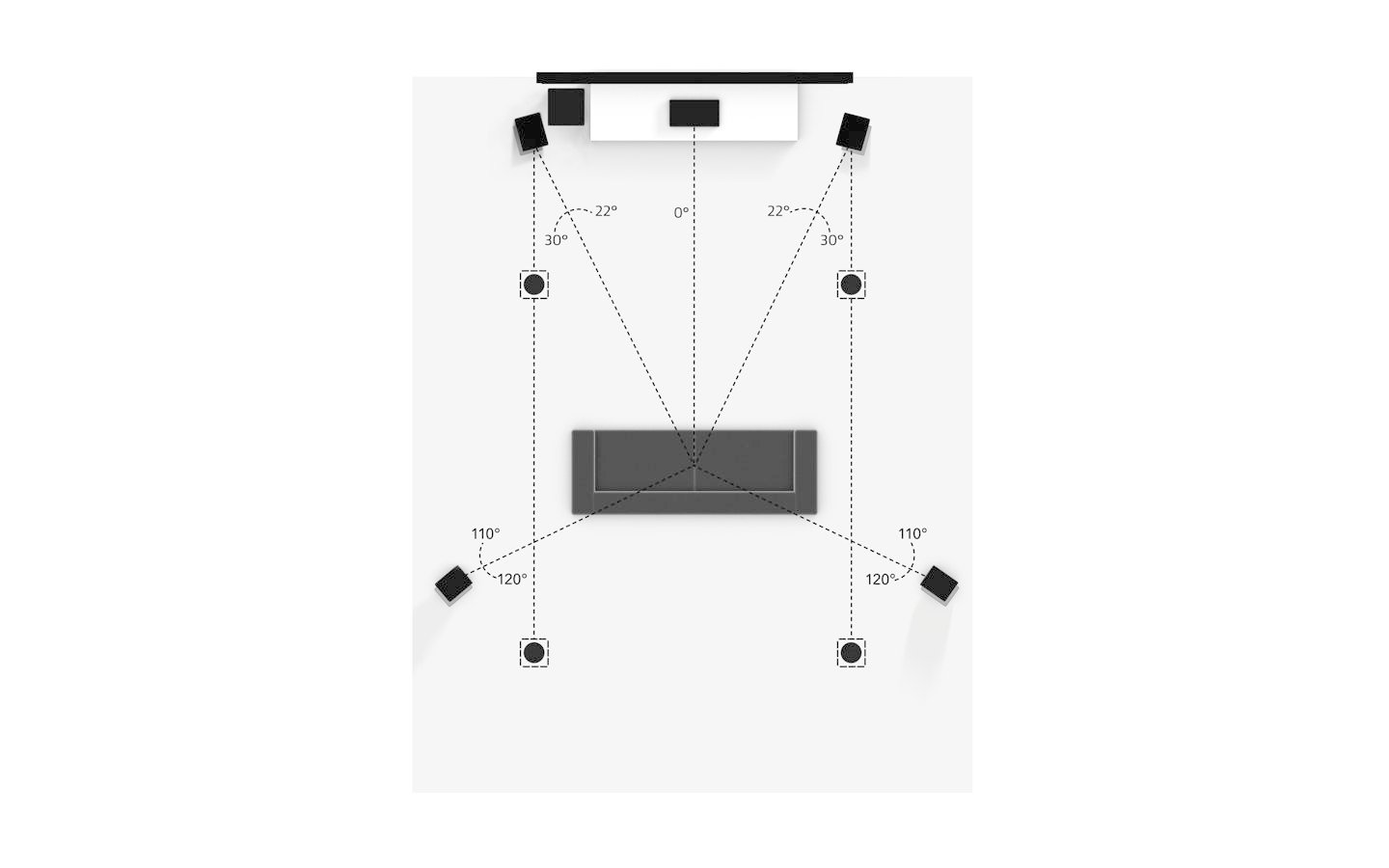
The optimal speaker setup for Dolby Atmos audio involves creating a three-dimensional sound field that allows sound to come from all directions, including above the listener.
Unlike traditional surround sound systems that are limited to horizontal placement, Dolby Atmos adds height channels to enable sound objects to move overhead, delivering a more immersive audio experience. For the best performance, a common configuration is a 7.1.4 setup, which includes seven ear-level speakers, one subwoofer, and four height or ceiling speakers.
However, even smaller configurations like 5.1.2 or 5.1.4 can offer an impressive immersive effect when properly calibrated. The key is precise speaker placement, room acoustics, and the use of Dolby Atmos-enabled content and AV receivers that support object-based audio processing.
 Speaker Configurator
Recommended Speaker Configuration for Home Theaters
- A 5.1.2 or 5.1.4 setup is widely regarded as ideal for most home theaters, offering a balance between performance and practicality. This includes five main speakers (front left, center, front right, surround left, and surround right), one subwoofer, and either two or four overhead or upward-firing height speakers.
- For larger rooms, a 7.1.4 configuration is recommended, adding two additional side or rear surround speakers to enhance spatial detail and motion accuracy of overhead sound effects.
- It’s important to use speakers specifically designed for Dolby Atmos, such as in-ceiling, on-wall angled, or upward-firing models that reflect sound off the ceiling, depending on room constraints and installation preferences.
Placement Guidelines for Dolby Atmos Speakers
- Ceiling-mounted height speakers should be installed slightly in front of and behind the primary listening position, ideally at a 45-degree angle above ear level, to ensure accurate overhead imaging.
- If using upward-firing speakers, they must be placed directly on top of or near the front and rear main speakers, with a clear path to the ceiling to effectively bounce sound down into the listening area.
- The center channel speaker should remain directly above or below the screen, aligned with the viewer's ear level, as it handles most dialog and on-screen action, maintaining clarity and localization.
Equipment and Calibration Considerations
- An AV receiver with Dolby Atmos decoding capability is essential, supporting at least 5.1.2 channels or higher depending on the chosen setup, along with HDMI 2.0 or later to carry the required audio and video signals.
- Room calibration tools such as Audyssey MultEQ, Dirac Live, or built-in systems like YPAO should be used to analyze speaker distances, levels, and room acoustics, ensuring optimal integration of all channels including height speakers.
- Proper speaker wiring, quality cables, and acoustic treatments like absorptive panels or diffusers help minimize reflections and enhance spatial precision, leading to a more realistic and cohesive soundstage.
What is the 1/3/1/5 speaker placement rule in Dolby Atmos configurations?

The 1/3/1/5 speaker placement rule refers to a specific configuration used in Dolby Atmos home theater setups to achieve immersive three-dimensional audio.
This numbering system breaks down the layout of speakers in a room: the first number (1) represents the front center channel, the second (3) stands for the three front-level speakers (left, center, right), the third (1) indicates the single subwoofer, and the fifth (5) refers to the five overhead or upward-firing speakers used to deliver height effects.
This configuration supports the object-based audio design of Dolby Atmos, allowing sound objects to be precisely placed and moved in three-dimensional space, including above the listener. The goal is to create a more lifelike and enveloping sound experience by incorporating audio from above, in addition to the traditional surround sound field.
 Speaker Surround Sound Channel Configuration
What Do the Numbers in 1/3/1/5 Represent in Dolby Atmos?
- The first number, 1, refers to the subwoofer channel, responsible for low-frequency effects (LFE) and bass output. This channel enhances impacts, explosions, and deep ambient sounds, providing physicality to the audio experience.
- The second number, 3, corresponds to the three front-stage speakers: left, center, and right. These handle most of the dialogue, on-screen action, and primary audio elements, anchoring the sonic image to the visuals on the screen.
- The third number, 1, indicates the center channel speaker, which is often critical for clear dialogue reproduction and is positioned directly above or below the display to match on-screen voices with their source.
- The last number, 5, refers to the five surround speakers or height channels. These are usually placed as two front height speakers, two side surrounds, and one rear surround, or configured as upward-firing or in-ceiling speakers to deliver overhead sound effects.
How Does the 1/3/1/5 Setup Enhance Atmos Audio Immersion?
- This configuration adds precise height layering through the five overhead or reflected height channels, allowing sounds like helicopters, rain, or ambient sky effects to come from above, which traditional 5.1 or 7.1 systems cannot replicate.
- By incorporating a dedicated center channel and front array, the setup ensures accurate sound localization for dialogue and front-centric effects, improving clarity and focus on the screen's action.
- The inclusion of a single subwoofer maintains deep bass response across the entire room, supporting both dynamic movie scenes and immersive music content, while maintaining system balance and avoiding bass clutter.
Practical Considerations for Implementing 1/3/1/5 in a Room
- Room architecture plays a key role; for upward-firing speakers to work effectively, ceilings should be flat, not vaulted, and made of reflective materials to bounce sound properly toward the listening area.
- Speaker positioning must adhere to Dolby's recommended angles and elevations—for example, height speakers should ideally be placed at a 45-degree angle above ear level when seated.
- Room size and acoustic treatment impact performance; larger rooms may require additional acoustic panels or speaker calibration via room correction software to maintain sound consistency and reduce echoes or standing waves.
What is the 83% rule in Dolby Atmos speaker placement?
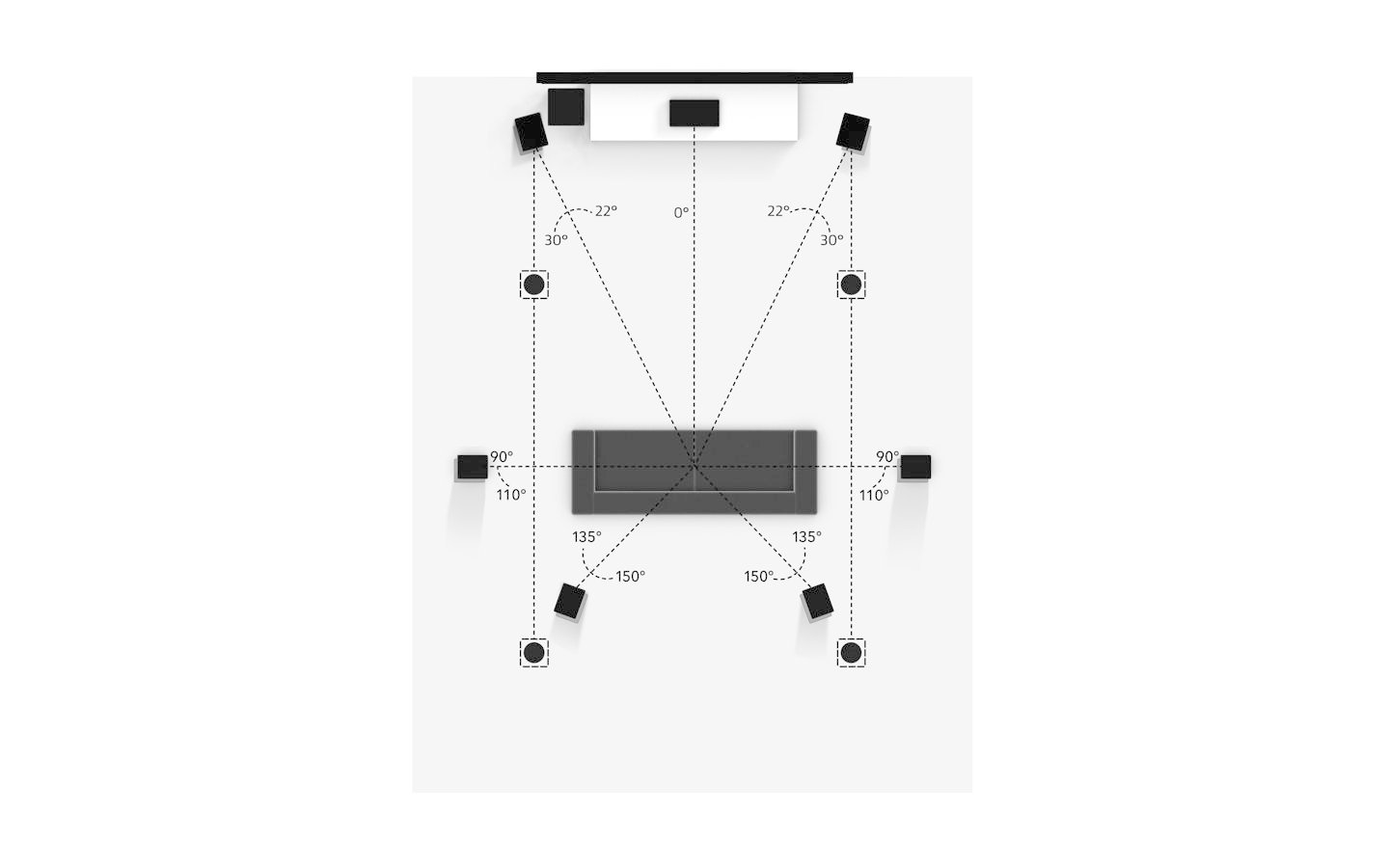
What Is the 83% Rule in Dolby Atmos Speaker Placement?
The 83% rule in Dolby Atmos speaker placement is a general guideline used to determine the optimal horizontal positioning of height or overhead speakers in a surround sound setup.
Specifically, it recommends placing Dolby Atmos-enabled speakers (such as ceiling, upward-firing, or wall-mounted height speakers) at approximately 83% of the distance from the primary listening position to the back wall of the room.
This creates a balanced soundfield by aligning the overhead audio imaging with the horizontal surround speakers, ensuring coherent sound object movement throughout the three-dimensional space. The rule helps maintain immersion by preventing audio from appearing too far forward or too far behind, which could disrupt the spatial realism that Dolby Atmos is designed to deliver.
 Speaker Configuration Small Or Large
- The 83% rule ensures that overhead sound effects align naturally with on-screen action and horizontal speaker cues.
- It is particularly effective in rectangular rooms where speaker placement can be measured from a fixed reference point.
- While not mandatory, this rule serves as a reliable starting point before fine-tuning through calibration and listening tests.
How Is the 83% Rule Applied in Practice?
Applying the 83% rule involves measuring the total depth of your listening room—from the front wall (where the screen or main speakers are) to the back wall—and multiplying that distance by 0.83 to find the ideal placement point for rear height speakers.
For example, in a room that is 10 feet deep, the calculation would be 10 × 0.83 = 8.3 feet from the front wall. This location is where you would install or aim the rear overhead speakers for a Dolby Atmos setup. This placement helps synchronize audio cues arriving from the rear upper direction with those from the main surround and front speakers, improving the perception of seamless sound movement across the room.
- Measure from the primary listening position or front wall to the back wall for accuracy.
- Mark the 83% point along the ceiling or upper wall to position rear height speakers.
- Use a stud finder and level tool to ensure secure and aligned installation.
Does the 83% Rule Apply to All Dolby Atmos Setups?
The 83% rule is a recommended starting point, but it does not universally apply to all room layouts or speaker configurations.
Dolby's official guidelines acknowledge variations in room shape, ceiling height, furniture layout, and speaker type (in-ceiling vs. upward-firing), which may require adjustments. In square rooms or rooms with non-standard geometries, adhering strictly to the 83% rule may not yield the best results.
 Speaker Configuration Software
Additionally, Dolby suggests that front height speakers should be placed at around 40% of the room depth from the front wall, meaning the 83% rule is primarily relevant for rear overhead channels. Always use AV receiver calibration tools (like Audyssey, Dirac, or YPAO) to validate and refine speaker placement after applying the rule.
- Front Atmos speakers are typically placed at 40% of room depth, not 83%, making the rule specific to rear height placement.
- Irregular room shapes may require deviation from the 83% guideline to avoid acoustic reflections or dead zones.
- Calibration software often adjusts for minor placement inaccuracies, so physical position is just one factor in optimal performance.
What audio format works best with Dolby Atmos speaker setups?
The audio format that works best with Dolby Atmos speaker setups is Dolby TrueHD with Dolby Atmos, typically found on 4K Ultra HD Blu-ray discs.
This lossless format preserves the full quality of the original studio master, delivering discrete audio object-based metadata that allows sounds to move freely in three-dimensional space. Unlike traditional channel-based audio, Dolby Atmos uses audio objects and overhead spatial data, which are efficiently encoded within the Dolby TrueHD stream.
Streaming platforms like Netflix, Disney+, and Apple TV+ also use Dolby Digital Plus with Dolby Atmos (also known as E-AC-3 JOC – Joint Object Coding), a compressed format that still provides high-quality immersive sound suitable for home setups. While not lossless, E-AC-3 JOC is optimized for bandwidth efficiency and widely supported by AV receivers and soundbars.
Core Audio Formats Compatible with Dolby Atmos
- Dolby TrueHD with Atmos is the highest-quality format available, primarily used in 4K Blu-ray discs. It supports bit-for-bit audio reproduction, allowing full access to the object-based audio layer essential for immersive effects.
- Dolby Digital Plus with Atmos (E-AC-3 JOC) is the standard for streaming services. It compresses audio intelligently while retaining object-based metadata, making it the most accessible Atmos format for online content.
- MLP (Meridian Lossless Packing), used in early HD DVD and Blu-ray formats, has been succeeded by Dolby TrueHD. While not currently used for Atmos, it laid the groundwork for lossless object-based audio.
Technical Requirements for Optimal Atmos Performance
- A compatible AV receiver or soundbar that supports Dolby Atmos decoding is essential. The device must be able to interpret object-based metadata and render it correctly across ceiling or upward-firing speakers.
- For lossless audio playback, an HDMI connection with a bandwidth sufficient for Dolby TrueHD (typically HDMI 2.0 or higher) is required. Older HDMI versions may not support the full bitstream.
- Proper speaker calibration, including correct placement of overhead or elevation speakers and room acoustics adjustment, ensures accurate sound localization and optimal Atmos immersion.
Streaming vs. Physical Media: Audio Quality Comparison
- 4K Blu-ray discs offer the best audio quality due to the use of lossless Dolby TrueHD with Atmos. This format supports up to 24-bit/48 kHz audio and full dynamic range, ideal for high-end home theaters.
- Streaming platforms use Dolby Digital Plus with Atmos, which applies compression to reduce file size. While perceptual differences are minimal for most listeners, audiophiles may notice reduced subtle details compared to lossless formats.
- Internet bandwidth and device capabilities can affect streaming quality. For example, a stable 25 Mbps or higher connection is recommended to ensure consistent delivery of high-bitrate Atmos audio on platforms like Netflix or Amazon Prime Video.
Frequently Asked Questions
What is a Dolby Atmos speaker configuration?
A Dolby Atmos speaker configuration refers to the arrangement of speakers in a home theater system that supports overhead or height-based audio effects. Unlike traditional surround sound, Atmos adds height channels to create a three-dimensional soundfield.
Common configurations include 5.1.2 or 7.2.4, where the last number indicates ceiling or upward-firing speakers. This immersive layout allows sound to move around and above the listener for a more realistic audio experience.
What does the numbering mean in Dolby Atmos setups like 5.1.4?
In Dolby Atmos configurations like 5.1.4, the numbers represent different speaker groups. The first number is the main surround speakers (e.g., 5), the second is subwoofers (e.g., 1), and the third indicates height or ceiling speakers (e.g., 4). So, 5.1.4 means five floor-level speakers, one subwoofer, and four overhead speakers. This format helps users identify the system’s audio dimension and scalability for immersive sound.
Can I use upward-firing speakers for Dolby Atmos?
Yes, upward-firing speakers are a popular option for Dolby Atmos setups. Placed on top of or near existing speakers, they reflect sound off the ceiling to create overhead audio effects.
However, your ceiling must be flat and made of reflective material for best results. While not as precise as in-ceiling speakers, upward-firing models offer a simpler, non-invasive way to experience immersive sound without major modifications to your room.
Do I need special equipment for a Dolby Atmos speaker setup?
Yes, you need compatible equipment for a Dolby Atmos setup. This includes an Atmos-enabled AV receiver, speakers (including height or ceiling speakers), and Atmos-compatible audio sources like Blu-ray players or streaming devices.
The speakers and receiver must support object-based audio decoding. Content must also be encoded in Dolby Atmos. Ensuring all components are certified guarantees optimal performance and immersive three-dimensional sound reproduction.
Leave a Reply