
Studio Monitors Active

Active studio monitors are essential tools for audio professionals seeking accurate sound reproduction in recording, mixing, and mastering environments.
Unlike passive speakers, they feature built-in amplifiers dedicated to each driver, ensuring optimal power distribution and improved signal control. Designed with precision and neutrality in mind, active studio monitors minimize coloration, delivering a flat frequency response that reveals the true characteristics of audio material.
With advancements in driver technology, cabinet design, and digital signal processing, modern active monitors offer exceptional clarity, imaging, and depth. They are widely used in home studios, broadcast facilities, and professional audio suites where reliability and sonic accuracy are paramount.
 Studio Monitor Placement Diagram
Understanding Active Studio Monitors: Precision Sound for Professional Audio Production
Active studio monitors have become an essential component in modern audio production environments, offering accurate sound reproduction crucial for mixing, mastering, and sound design.
Unlike passive speakers, active studio monitors contain built-in amplifiers specifically tailored to each driver—typically a woofer and a tweeter—which ensures optimal performance and minimizes signal loss. This integration allows for better control over frequency response and phase coherence, resulting in a flatter frequency response and more transparent audio representation.
Designed for critical listening, these monitors are commonly used in recording studios, home studios, and post-production suites where sonic accuracy is paramount. Their self-contained nature simplifies setup and improves consistency across different acoustic environments, making them a preferred choice among audio engineers and producers.
How Active Studio Monitors Work: Built-in Amplification and Signal Processing
Active studio monitors operate using dedicated internal amplifiers for each speaker driver, a configuration known as bi-amping (or tri-amping in more advanced models).
 Studio Monitor Setup Diagram
This design allows the amplifier to be precisely matched to the driver’s electrical and mechanical characteristics, enhancing efficiency and reducing distortion. Many active monitors also include onboard crossover networks that split the audio signal before amplification, ensuring that low frequencies are directed to the woofer and high frequencies to the tweeter with minimal interference.
Some models further integrate digital signal processing (DSP) for room correction, frequency tuning, and driver protection, enabling users to adapt the monitor’s performance to their specific acoustic space. This level of integration delivers a more coherent and accurate soundstage compared to passive systems that rely on external amplifiers and crossovers.
Benefits of Using Active Studio Monitors in Audio Production
One of the primary advantages of active studio monitors is their ability to provide consistent and reliable sound reproduction, a critical factor in making informed decisions during mixing and mastering.
Because the amplifiers are integrated and pre-matched, users avoid the complications of pairing separate amplifiers and speakers, reducing setup time and minimizing compatibility issues. Additionally, active monitors often feature balanced XLR or TRS inputs, offering better noise rejection and signal integrity over long cable runs.
 Studio Monitor Switch Box
Their compact, all-in-one design also saves space and reduces clutter, ideal for small studios or project spaces. With advanced features like front- or rear-panel acoustic tuning controls (such as bass and treble shelving), engineers can tailor the monitors’ output to suit room acoustics, ultimately improving translation across different playback systems.
Key Features to Consider When Choosing Active Studio Monitors
When selecting active studio monitors, several technical and practical aspects should be evaluated to ensure optimal performance.
Critical factors include driver size (commonly 5”, 6.5”, or 8”), which affects bass response and overall volume capability, and frequency response range, which indicates how accurately the monitor reproduces low and high frequencies. The quality of the built-in amplifiers, measured in watts per channel, impacts headroom and dynamic range.
Other important features include input types (XLR, TRS, RCA), the presence of DSP-driven room correction, and cabinet design that minimizes unwanted resonance. Placement flexibility and near-field vs. mid-field performance should also be considered depending on studio size. Ultimately, choosing the right monitor involves balancing performance, room compatibility, and budget.
 Studio Monitor Systems
| Feature | Description | Why It Matters |
|---|---|---|
| Built-in Amplifiers | Each driver has a dedicated internal amplifier. | Ensures optimal power delivery and reduces signal degradation. |
| Bi-amping | Separate amplification for woofer and tweeter. | Improves clarity and reduces intermodulation distortion. |
| Frequency Response | Range of audible frequencies the monitor can reproduce (e.g., 45 Hz – 22 kHz). | A flatter response provides more accurate sound for mixing. |
| DSP & Room Calibration | Digital processing to adjust output based on room acoustics. | Enhances accuracy by compensating for room anomalies. |
| Input Options | Includes XLR, TRS, and sometimes RCA or digital inputs. | Balanced inputs improve signal integrity and reduce noise. |
Guide to Choosing the Best Active Studio Monitors for Professional Audio Production
Are active studio monitors the better choice for professional audio production?
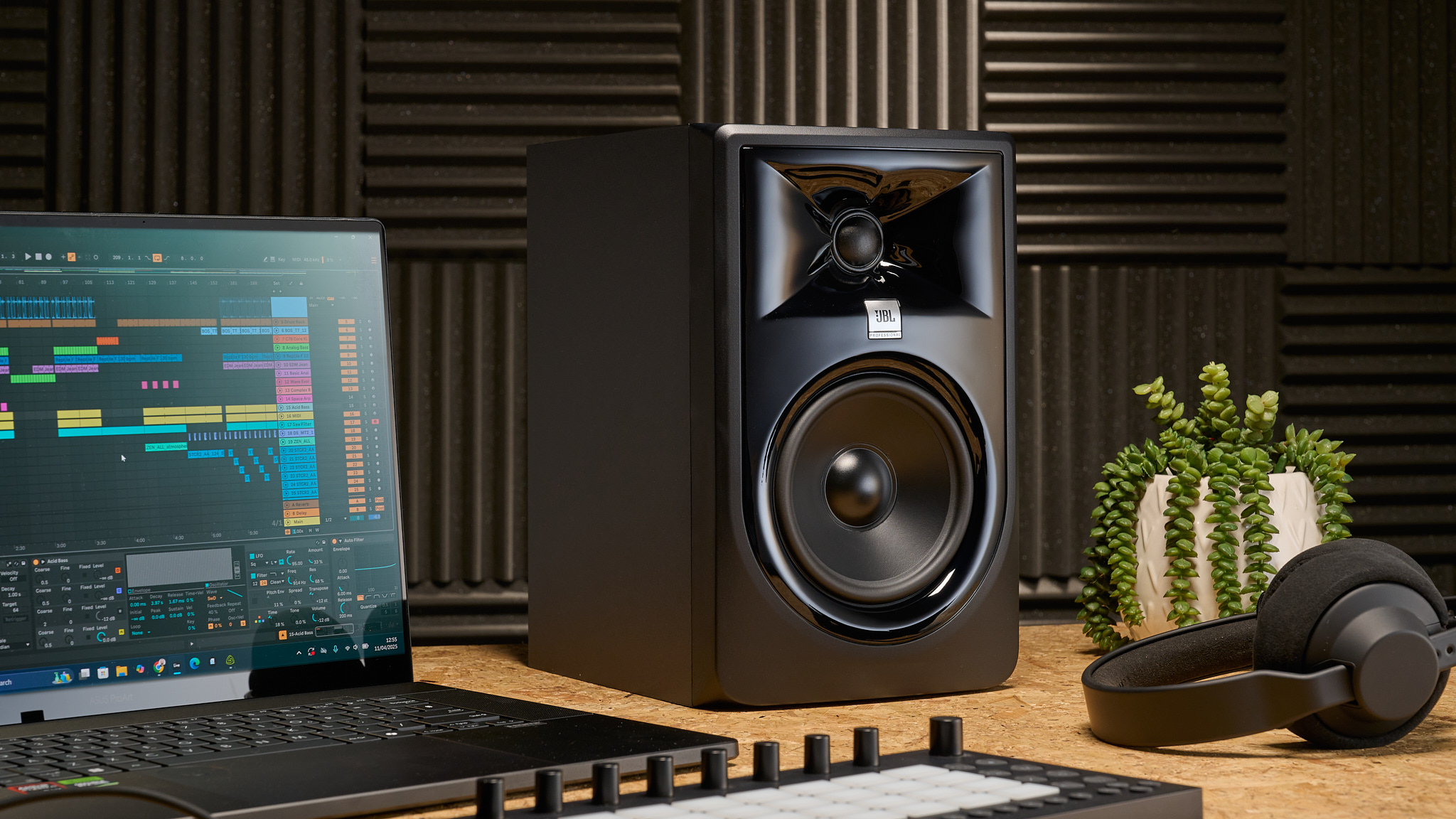
Advantages of Active Studio Monitors in Professional Settings
- Active studio monitors come with built-in amplifiers that are specifically matched to each driver, ensuring optimal power distribution and performance. This eliminates the need for external amplifiers, simplifying the studio setup and reducing potential impedance mismatches.
- Due to the integrated design, active monitors often feature advanced crossover systems that more precisely direct frequencies to the appropriate drivers (e.g., tweeters and woofers), resulting in improved sound accuracy and clarity across the frequency spectrum.
- Many active monitors include onboard signal processing such as EQ adjustments, room correction features, and input filtering, allowing engineers to tailor the monitors' response to their specific acoustic environment, thereby enhancing monitoring reliability.
Considerations When Choosing Between Active and Passive Monitors
- One major consideration is flexibility: passive monitors offer greater customization since users can select separate amplifiers and crossover points, which may appeal to high-end studios with specialized sonic goals and experienced engineers.
- Maintenance and repair can be more straightforward with passive systems, as failing components like amplifiers can be replaced independently without affecting the speaker drivers, whereas in active monitors, a failed internal amp might require servicing the entire unit.
- Budget constraints also play a role. While active monitors may have a higher upfront cost, they consolidate several components into one package, potentially offering better value over time by reducing the need for additional gear such as outboard amplification and electronic crossovers.
Impact on Workflow and Studio Integration
- Active studio monitors streamline studio integration by reducing cable clutter and setup complexity, enabling audio professionals to focus more on creative decisions rather than technical troubleshooting during recording and mixing sessions.
- Manufacturers often design active monitors with calibration technologies such as DSP-based room tuning, which can compensate for acoustic anomalies in untreated or imperfect listening environments, helping maintain consistency across different studios.
- Because active monitors are individually powered, they typically provide better stereo imaging and phase coherence since each driver receives dedicated amplification, minimizing timing delays and improving the precision of the stereo field—critical for detailed audio editing and mastering tasks.
What are active studio monitors and how do they differ from passive ones?
What Are Active Studio Monitors?
Active studio monitors, also known as powered monitors, are audio speakers that come with built-in amplifiers.
Each driver—such as the woofer and tweeter—is typically powered by its own dedicated amplifier, a configuration known as bi-amping or tri-amping when three drivers are involved. This integration allows for precise tuning between the amplifier and the drivers, resulting in optimized performance and minimal signal loss.
Since the amplifier components are designed specifically for the drivers they power, active monitors deliver improved clarity, faster transient response, and better overall sound accuracy. These qualities make them a preferred choice in professional audio production settings where sonic precision is critical.
 Studio Monitor Vs Speakers
- They feature internal amplification, eliminating the need for an external amplifier.
- Active monitors often include onboard signal processing for frequency equalization and driver alignment.
- They are typically designed with a balanced input (such as XLR or TRS) to maintain signal integrity from audio interfaces or mixers.
How Do Passive Studio Monitors Work?
Passive studio monitors do not have internal amplifiers and require an external power amplifier to function.
The audio signal from the source—like an audio interface or mixer—must first be routed to an amplifier, which then powers the speakers. Because the amplifier is not specifically matched to the monitor during manufacturing, there is potential for mismatched power delivery and phase issues, which can affect sound quality.
Additionally, passive systems need proper cabling between the amplifier and speakers, increasing setup complexity. While passive monitors offer flexibility in amplifier selection and potential for system customization, they demand more technical knowledge and careful integration to achieve optimal sound reproduction.
- They depend on an external amplifier, which adds components and complexity to the audio setup.
- Passive monitors usually use unbalanced or balanced speaker cables to connect to the amplifier.
- System performance relies heavily on the compatibility between the amplifier and speaker specifications, such as impedance and power ratings.
Key Differences Between Active and Passive Studio Monitors
The primary difference between active and passive studio monitors lies in their amplification method. Active monitors offer a streamlined, all-in-one solution with amplifiers built directly into the speaker enclosure, whereas passive monitors rely on external amplification.
 Studio Monitor Wall Mounts
This distinction affects several aspects of performance and usability. Active monitors generally provide more accurate and consistent sound because the internal amplifiers are precisely matched to the drivers. They also save space and reduce cable clutter since no external amplifier rack is needed.
In contrast, passive monitors allow for greater system customization—users can upgrade or swap amplifiers independently—but require more setup time and technical expertise to achieve balanced sound output.
- Active monitors provide plug-and-play convenience with integrated amplifiers, while passive monitors require additional equipment and configuration.
- Signal processing in active monitors is often more advanced due to manufacturer-specific tuning.
- Active monitors typically deliver better phase coherence and frequency response due to dedicated amplification per driver.
Are KRK Rokit monitors active or passive studio speakers?

KRK Rokit monitors are active studio speakers. Each speaker in the Rokit series contains built-in amplifiers specifically tuned for the individual drivers (the woofer and tweeter), which means they do not require an external amplifier to function.
This integrated amplification allows for optimized performance, as the power output is matched precisely to the speaker's design. Additionally, these monitors feature onboard signal processing, such as equalization and limiters, to enhance sound accuracy and protect the components. Being active, KRK Rokit monitors only require a direct line-level audio input from an audio interface, mixer, or other source to operate.
What Defines an Active Studio Monitor?
- An active studio monitor has internal amplifiers dedicated to each driver, such as a separate amplifier for the low-frequency woofer and another for the high-frequency tweeter. This design ensures precise control over sound reproduction.
- These monitors typically include internal crossover networks that split the incoming audio signal into different frequency ranges and send them to the appropriate driver, improving clarity and reducing distortion.
- Active monitors are designed for direct connection to line-level sources, eliminating the need for external amplification and simplifying the studio setup process.
How Do KRK Rokit Monitors Utilize Internal Amplification?
- Each KRK Rokit model includes bi-amped configurations, meaning the woofer and tweeter each receive power from their own dedicated amplifier channel, providing greater dynamic response and reduced interference between frequency ranges.
- The amplifiers are custom-tuned by KRK to match the specific characteristics of the speaker drivers and enclosure, ensuring optimal performance and sonic accuracy across the frequency spectrum.
- Internal amplification also allows for tighter integration with the monitor’s acoustic tuning features, such as the DSP-based room correction present in newer Rokit generations, which adapts output based on the listening environment.
Why Choose Active Monitors Like the KRK Rokit Series?
- Active monitors offer a streamlined setup since they eliminate the need for external amplifiers or complex cabling, making them ideal for home studios and project environments where space and simplicity are priorities.
- The integrated design allows KRK to precisely match amplifier characteristics to the speaker components, resulting in better transient response, tighter bass, and more detailed highs compared to passive systems with mismatched external amps.
- Many KRK Rokit models come with acoustic tuning controls such as variable EQ presets and input sensitivity adjustments, enabling users to tailor the sound output based on room acoustics and personal monitoring preferences.
What does active mean when referring to studio monitors?
When referring to studio monitors, active means that the speakers have built-in amplifiers specifically designed for each driver (such as the woofer and tweeter).
Unlike passive speakers, which require an external amplifier to function, active studio monitors process and amplify the audio signal internally. This integration allows for precise tuning between the amplifier and the speaker drivers, resulting in more accurate sound reproduction.
Most active monitors also include active crossovers, which split the incoming audio signal into different frequency ranges before amplification, ensuring each driver only receives the frequencies it is designed to reproduce. This leads to better control, clarity, and fidelity—essential qualities in professional audio environments such as recording studios and mixing suites.
How Active Studio Monitors Work Internally
- Active studio monitors utilize dedicated amplifiers for each driver—typically one for the woofer and another for the tweeter, and sometimes an additional one for midrange drivers in more complex designs. This configuration, known as bi-amping or tri-amping, ensures that each frequency range is amplified with optimized power and precision.
- The audio signal enters the monitor and is first routed through an active crossover network, which electronically divides the full-range signal into separate low, mid, and high-frequency bands before they reach the respective amplifiers.
- Because the amplifiers are matched exactly to the drivers by the manufacturer, there is greater control over dynamics, phase alignment, and transient response, leading to a more transparent and accurate monitoring experience ideal for critical listening tasks.
Advantages of Using Active Monitors in a Studio
- One major benefit of active monitors is convenience—since the amplifiers are already built-in, there’s no need to select or purchase separate power amps, simplifying setup and reducing the number of components required in a studio signal chain.
- Manufacturers engineer the amplifiers and crossover circuits to perfectly complement the specific drivers used, which minimizes compatibility issues and optimizes performance across the frequency spectrum.
- Many active monitors include input filtering, room correction features, and digital signal processing (DSP) that allow users to fine-tune the sound based on their acoustic environment, further enhancing accuracy and reliability during audio production.
Differences Between Active and Passive Studio Monitors
- The primary distinction lies in amplification: active monitors have internal amplifiers, while passive monitors rely on external amplifiers or powered mixers to drive the speakers, requiring additional equipment and cabling.
- Passive monitors use passive crossovers, which are less precise than the active crossovers used in powered speakers because they operate after amplification and can introduce signal loss and phase issues.
- Active monitors typically offer better transient response and tighter bass due to the direct connection between the amplifier and driver, while passive systems may suffer from power inefficiencies and impedance mismatches that degrade sound quality, especially in demanding studio applications.
Frequently Asked Questions
What are active studio monitors?
Active studio monitors are speakers with built-in amplifiers designed specifically for accurate audio reproduction. Unlike passive monitors, they don't require external amplification.
Each driver (like woofer and tweeter) often has its own amplifier, ensuring optimal power distribution. This integration enhances sound clarity and reduces signal loss, making them ideal for recording, mixing, and mastering in professional audio environments.
Why should I use active studio monitors for music production?
Active studio monitors provide precise, flat frequency response, essential for accurate mixing and mastering. Their built-in amplifiers are perfectly matched to the drivers, ensuring optimal performance.
This accuracy helps producers hear every detail in their audio. With minimal signal loss and no need for external amps, active monitors offer convenience and consistency, making them the preferred choice for professional and home studios alike.
Do active studio monitors need an external amplifier?
No, active studio monitors do not need an external amplifier. They have built-in amplifiers dedicated to each driver, such as the woofer and tweeter.
This internal amplification ensures better control over sound quality and eliminates the need for additional equipment. Simply connect your audio interface or mixer directly to the monitor, making setup easier and reducing signal degradation for clearer, more accurate sound.
How do I connect active studio monitors to my audio interface?
Connect active studio monitors to your audio interface using balanced cables like XLR or TRS. Plug one end into the interface’s outputs and the other into the monitor’s input.
Ensure both monitors are powered off before connecting. Turn on the monitors after making connections. Set the volume on the interface and monitors appropriately to avoid distortion. This setup ensures high-fidelity sound with minimal noise for accurate audio monitoring.
Leave a Reply