
Yamaha Receiver Speaker Configuration

Setting up the ideal sound environment begins with understanding your audio equipment, and Yamaha receivers stand at the forefront of home theater innovation.
Proper speaker configuration is essential to unlock their full potential, delivering immersive, room-filling audio. Whether you're using a 5.1, 7.1, or surround sound setup, Yamaha receivers offer advanced calibration tools like YPAO (Yamaha Parametric Acoustic Optimizer) to fine-tune speaker levels, distances, and frequencies automatically.
This guide walks you through the fundamentals of configuring speakers with your Yamaha receiver, ensuring optimal placement, wiring, and settings for crystal-clear dialogue, dynamic effects, and balanced bass. From initial setup to fine adjustments, get the most out of your home theater experience.
 Realtek Hd Audio Manager Speaker Configuration
Optimizing Your Audio Experience with Yamaha Receiver Speaker Configuration
Yamaha receivers are renowned for their advanced audio processing, user-friendly interfaces, and support for a wide range of speaker setups, making them a popular choice among audiophiles and home theater enthusiasts.
Configuring your speaker system correctly within a Yamaha AV receiver ensures balanced sound distribution, maximizes room acoustics, and fully leverages technologies like Yamaha Compressed Music Enhancer, Adaptive DSP, and YPAO (Yamaha Parametric Room Acoustic Optimizer). These receivers allow customization for various layouts—from basic 5.1 surround sound to immersive configurations like 7.1, 5.1.2 Dolby Atmos, or even expansive 7.2.4 setups.
Understanding speaker size designation, distance calibration, crossover settings, and channel levels through the receiver’s on-screen menu or remote interface is essential for achieving optimal sonic performance. Whether you're setting up front, center, surround, or height channels, Yamaha's detailed setup wizard and automatic calibration system help tailor the audio output to your specific room and speaker arrangement.
Understanding Speaker Size Settings and Crossover Frequencies
Properly configuring speaker size and crossover settings is critical in a Yamaha receiver to ensure each speaker handles the appropriate frequency range and works cohesively with the subwoofer. In the receiver’s speaker setup menu, you can designate each speaker as Small or Large—a choice that affects how bass frequencies are managed.
 Sonos Playbar Speaker Configuration
When a speaker is set to Small, low-frequency sounds are redirected to the subwoofer via an active crossover, preventing strain on smaller satellite speakers. The crossover frequency, typically set between 80 Hz and 120 Hz (with 80 Hz as the THX standard), determines the point at which the receiver redirects bass to the subwoofer.
Yamaha receivers allow per-channel crossover adjustment, enabling precise tuning based on speaker capabilities and room characteristics. Using the YPAO calibration system can automatically recommend optimal crossover points, but manual fine-tuning may further enhance clarity and bass integration.
Using YPAO for Automatic Room Calibration and Optimization
Yamaha’s proprietary YPAO (Yamaha Parametric Room Acoustic Optimizer) system simplifies speaker configuration by automatically analyzing your room’s acoustics and adjusting audio settings for optimal performance. The process involves connecting a supplied microphone to the receiver, placing it at the main listening position, and initiating the calibration sequence.
YPAO measures speaker distances, levels, frequency response, and impedance, then applies digital room correction using EQ filters tailored to compensate for acoustic imperfections like echoes, standing waves, and uneven frequency absorption.
 Sonos Speaker Not Configured
Advanced versions like YPAO with Reflection and Volume also analyze speaker directivity and set optimal volume curves for different listening levels. After calibration, the system assigns speaker sizes and distances, sets crossover frequencies, and balances channel levels, significantly reducing the need for manual fine-tuning while delivering a well-integrated, cinema-grade audio experience.
Configuring Surround and Height Channels for Immersive Audio
To experience formats like Dolby Atmos, DTS:X, or Auro-3D, Yamaha receivers support height and surround speaker integration, enabling three-dimensional soundfields. For Atmos setups, you can install ceiling-mounted speakers, up-firing modules placed on top of existing speakers, or utilize wall-mounted height channels.
Yamaha receivers guide users through configuring these speakers in setups such as 5.1.2 (5 main speakers, 1 subwoofer, 2 height speakers) or 7.2.4 (7 main speakers, 2 subwoofers, 4 height speakers). The receiver’s audio engine maps object-based audio data to the defined speaker layout, creating overhead effects like rain, helicopters, or ambient sounds.
Proper placement—ensuring height speakers are angled toward the listening area and spaced according to Yamaha’s guidelines—is key. The Sound Field and DSP modes within the receiver allow you to enhance or simulate immersive audio even with fewer speakers, making high-end cinematic experiences accessible in various room configurations.
 Speaker Configuration Mono Or Stereo Valorant
| Configuration | Speakers Included | Best For | Yamaha Features Utilized |
|---|---|---|---|
| 5.1 | Front L/R, Center, Surround L/R, Subwoofer | Standard home theater, movies, TV | YPAO calibration, Bass management, Direct/Standard listening modes |
| 7.1 | 5.1 + Surround Back L/R | Large rooms, immersive surround | Adaptive DSP, Rear Presence, Pro Logic IIz |
| 5.1.2 Atmos | 5.1 + 2 Height speakers | 3D audio, overhead effects | Dolby Atmos decoding, Virtual Presence Speaker, YPAO 3D |
| 7.2.4 | 7 main, 2 subs, 4 height speakers | Premium home cinema, object-based audio | CINEMA DSP 3D, Full-range Atmos/DTS:X, YPAO with 3D analysis |
Yamaha Receiver Speaker Configuration: A Complete Setup Guide
What is the optimal speaker setup for a Yamaha receiver?
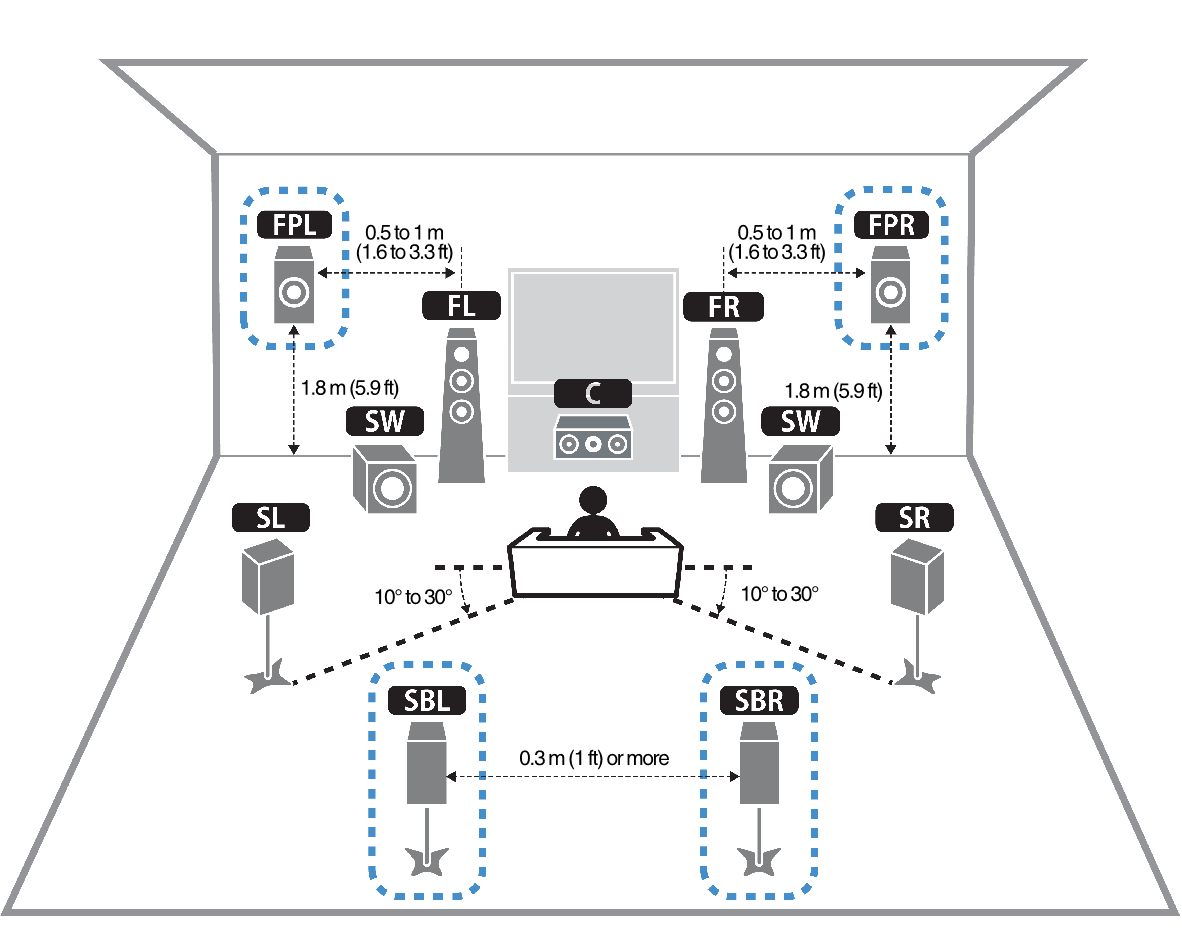
The optimal speaker setup for a Yamaha receiver depends on several factors, including the model of the receiver, room size, acoustic properties, and personal preference for audio content such as movies, music, or gaming.
Yamaha receivers are known for their advanced audio processing technologies like YPAO (Yamaha Parametric Room Acoustic Optimizer), which allows them to adapt to various speaker arrangements and room conditions.
A properly configured setup ensures immersive sound, balanced frequency response, and precise audio localization. To maximize performance, it is essential to select the correct speaker configuration, place each speaker at the recommended distance and angle, and allow the receiver to calibrate the system accurately through its built-in tools.
 Speaker Configuration Windows 10
Choosing the Right Speaker Configuration
- Select a speaker configuration that matches your Yamaha receiver's capabilities. Most modern Yamaha receivers support configurations like 5.1, 7.1, or even surround formats such as Dolby Atmos with 5.1.2 or 7.1.4 setups. Determine whether your space and budget allow for a full surround array or a more compact system.
- Consider the type of content you listen to most. For movie enthusiasts, a 5.1 or 7.1 surround setup with a center channel, front left and right speakers, surround speakers, and a subwoofer provides excellent spatial audio. Music listeners might prefer a stereo setup with high-quality front speakers, though Yamaha's surround processing can enhance even two-channel audio.
- Ensure your speaker impedance and power handling are compatible with your Yamaha receiver’s output specifications. Most Yamaha receivers perform best with 6 to 8 ohm speakers, maintaining stability and optimal dynamic range without overloading the amplifier section.
Optimal Speaker Placement and Room Calibration
- Position the front left and right speakers at ear level when seated, forming a 22–30 degree angle from the primary listening position. This creates a focused stereo image and enhances the soundstage for both music and cinematic content.
- Place the center channel speaker directly above or below the TV or screen, angled toward the listener's ear height. This ensures clear dialogue reproduction, which is essential for movies and TV shows. The surround speakers should be placed to the side or slightly behind the listening area at ear level or slightly above.
- Run Yamaha's YPAO system by connecting the included microphone to the receiver and following the on-screen instructions. YPAO measures room acoustics, adjusts speaker distances, sets appropriate volume levels, and optimizes equalization for each channel. Using multiple measurement points improves accuracy, especially in irregularly shaped rooms.
Incorporating Subwoofers and Height Channels for Immersive Audio
- Add at least one powered subwoofer to handle low-frequency effects (LFE). Place the subwoofer along the front wall, ideally in a corner or near a wall to enhance bass response. Yamaha receivers allow bass management settings to direct low frequencies to the subwoofer, relieving smaller speakers from handling deep bass.
- If your Yamaha receiver supports Dolby Atmos or DTS:X, integrate ceiling-mounted or upward-firing speakers to enable height channels. For a 5.1.2 setup, install two height speakers above the front left and right speakers. These deliver overhead sound effects like rain, helicopters, or ambient cues, greatly enhancing immersion.
- Use Yamaha’s advanced settings to fine-tune the crossover frequencies, LFE level, and speaker size settings in the receiver’s menu. Properly configured, a combination of subwoofers and height channels complements the main speakers, producing a seamless, three-dimensional sound field that fully utilizes the receiver’s processing power.
What is the optimal speaker configuration for maximizing sound quality on a Yamaha receiver?
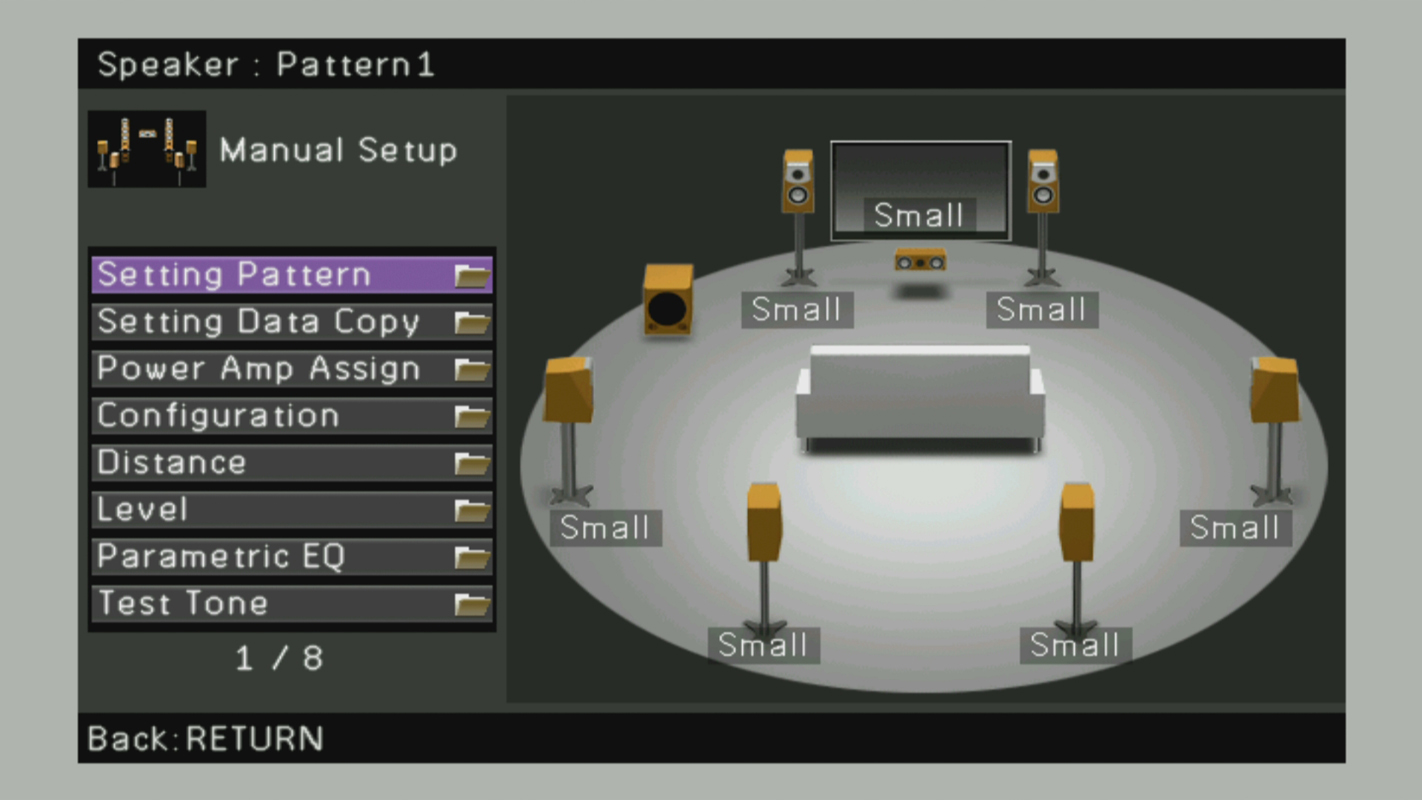
The optimal speaker configuration for maximizing sound quality on a Yamaha receiver depends on several factors, including room size, listening preferences, and the receiver model’s capabilities. Yamaha receivers, especially those supporting advanced surround sound formats like Dolby Atmos and DTS:X, perform best when paired with a well-balanced speaker setup.
A common recommended configuration is a 5.1.2 or 7.1.4 system, which includes front left and right speakers, a center channel, surround left and right speakers, subwoofers (the .1), and height or upward-firing speakers (the .2 or .4) to deliver immersive three-dimensional audio.
Yamaha’s proprietary YPAO (Yamaha Parametric Acoustic Optimization) room calibration system further enhances sound quality by automatically adjusting speaker levels, distances, crossovers, and equalization to suit your room’s acoustics. Proper speaker placement, high-quality cabling, and matching speaker sensitivities also contribute significantly to achieving the best audio performance.
 Speaker Configurations
Choosing the Right Speaker Layout for Your Room
- Selecting the optimal speaker layout starts with assessing your room size and shape. For smaller rooms, a 5.1 configuration may provide sufficient immersion without overcrowding the space with sound reflections. Larger rooms benefit from expanded setups like 7.1.2 or even 7.1.4 to fill the area with balanced audio.
- Consider furniture placement and listener position. The front speakers should form an equilateral triangle with the primary listening position, and surround speakers should be slightly behind and to the sides. For Atmos support, ensure there is space to install ceiling-mounted or upward-firing speakers that reflect sound effectively.
- Asymmetrical rooms or those with unusual acoustics may require strategic speaker positioning and the use of Yamaha’s YPAO with Reflected Sound Control to minimize phase cancellation and standing waves, thereby preserving clarity and spatial accuracy.
Leveraging Yamaha's Advanced Audio Technologies
- Yamaha receivers feature advanced audio processing technologies such as YPAO, which automatically measures room acoustics using a supplied microphone and adjusts each speaker’s output accordingly. Enabling YPAO ensures that volume levels, time delays, and frequency response are optimized for your unique environment.
- For high-resolution audio playback, models with the MusicCast ecosystem and support for lossless formats like FLAC, ALAC, and DSD allow for superior sound quality from digital sources. Ensure that your connected devices and media files support these formats to fully utilize the receiver’s capabilities.
- Advanced surround modes like A.R.T. (Adaptive Reference Technology) and Cinema DSP HD3 enhance spatial reproduction by simulating professional studio acoustics. These can be particularly effective when watching movies or listening to multichannel music, delivering a more natural and enveloping experience.
Integrating Subwoofers and Height Channels for Immersive Audio
- Incorporating at least one high-quality subwoofer is essential for achieving full-range sound. Yamaha receivers typically support dual subwoofer outputs, which help distribute bass more evenly and reduce room mode distortions. Placing subwoofers in opposing corners or using the YPAO sub EQ function can significantly improve low-frequency response.
- For three-dimensional sound, adding height channels is crucial. A 5.1.2 setup includes two upward-firing or in-ceiling speakers to reproduce overhead audio effects, such as rain or helicopter sounds in Atmos-encoded content. Yamaha’s support for these immersive formats allows seamless integration with compatible speakers.
- Ensure that your AV receiver supports the latest audio codecs and has sufficient amplifier channels to power all speakers simultaneously. Models like the RX-A series or RX-V series with built-in Atmos decoding and amplification for height channels are ideal choices for maximizing sonic depth and realism.
Frequently Asked Questions
How do I set up speaker configuration on my Yamaha receiver?
Access the receiver's menu using the remote, go to Speaker Setup in the settings, and select the number and types of speakers connected. Use the built-in auto-calibration (such as YPAO) by placing the microphone at the main listening position. Run the calibration to automatically adjust speaker levels, distances, and crossover frequencies for optimal sound. Manually tweak settings if needed based on room acoustics or speaker placement.
What is YPAO and how does it help with speaker configuration?
YPAO (Yamaha Parametric Acoustic Optimizer) is an automatic room calibration system that optimizes speaker settings using a supplied microphone. It analyzes room acoustics, adjusts speaker levels, distances, crossover frequencies, and equalization to match the environment. This ensures balanced sound output across all speakers. For best results, perform YPAO in a quiet room and place the microphone at ear level in the main listening area during calibration.
Can I manually adjust speaker settings after running YPAO?
Yes, after running YPAO, you can manually adjust speaker settings such as volume level, distance, crossover frequency, and speaker size. Enter the receiver’s setup menu and navigate to Speaker Configuration. Manual adjustments are useful if you’ve moved speakers, replaced components, or simply prefer a different sound balance. Yamaha receivers allow both auto-calibrated and custom settings, giving users flexibility to fine-tune audio performance based on personal preference or room changes.
What speaker configurations are supported by Yamaha receivers?
Yamaha receivers typically support multiple configurations, including 5.1, 7.1, and advanced surround formats like Dolby Atmos (e.g., 5.1.2, 7.1.4). Supported setups depend on the model's channel count. Receivers can handle various speaker types: front, center, surround, height, or rear. Check your model’s manual for exact capabilities. Properly configuring speaker layout in settings ensures optimal surround sound performance and compatibility with high-resolution audio formats.
 Speaker Configurator
Leave a Reply